Hydraulic engine
The wolf does not appear. The man does not disappear. No mass is created. Vascular redistribution and tonic contraction on a human skeleton: crouched hyper-muscular biped, keratin-shaft coat. Four-second burn-and-flush.
PROJECT LCAN
A Complete Theoretical Biology of Homo sapiens lycanus
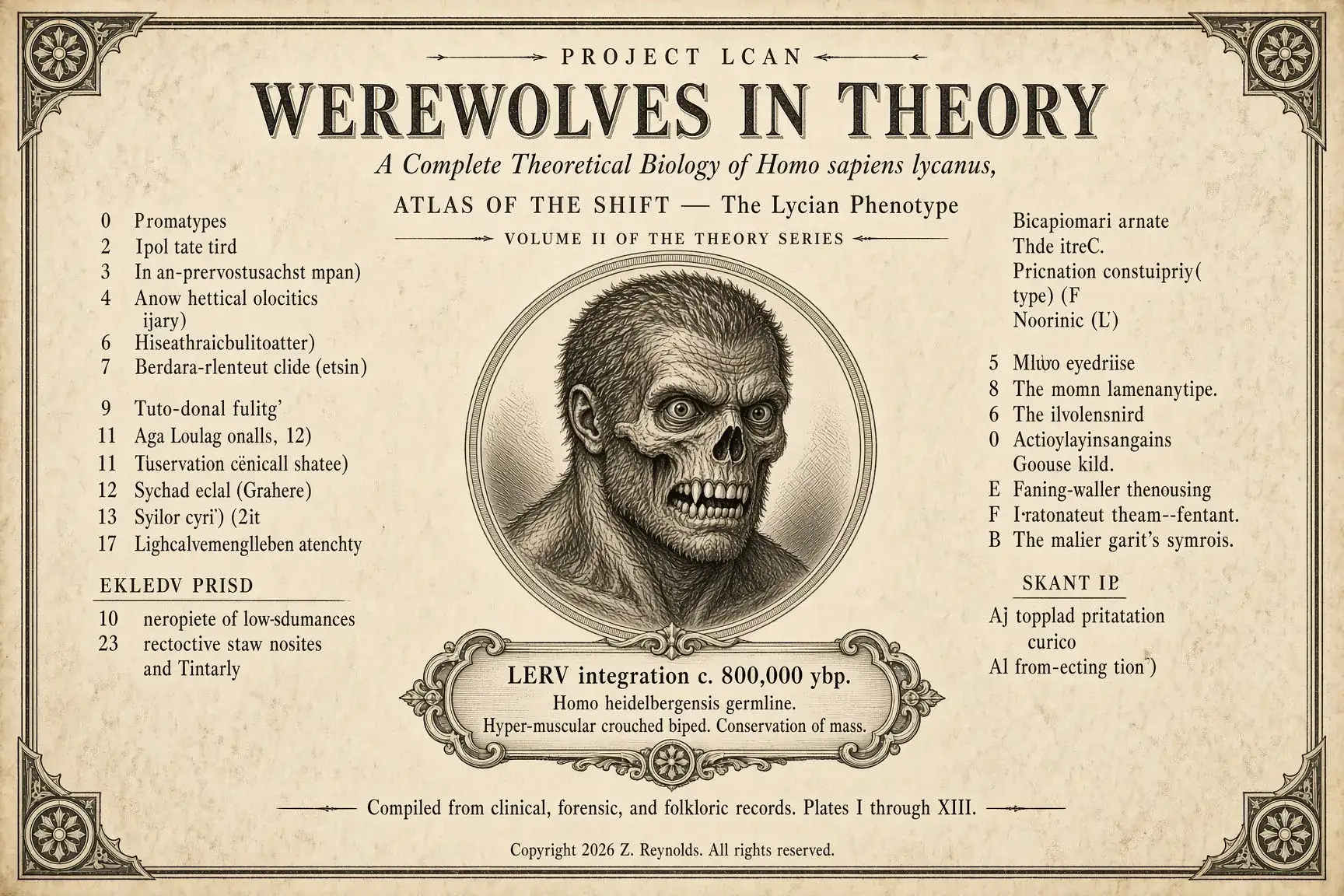
26 copperplates
How the moon does it, and how a body changes without creating mass.
Folklore says the man becomes a wolf under a full moon, and that silver kills him. The file’s account is a key already in the germline, triggered by the geometry of moonlight and one colour of it, and a hydraulic engine that pumps blood into muscle on a human skeleton. The wolf does not appear. The man does not disappear. No mass is created. Heat is flushed in about four seconds. The coat is hair for one night.
The wolf does not appear. The man does not disappear. No mass is created.
About seven hours to read.
Print · eBook · Audio
Not yet. The shop is not open. Runtimes and ISBNs will sit here when they exist. Leave an address if you want the first letter.
The wolf does not appear. The man does not disappear. No mass is created.
This document does not begin with a theory. It begins with a problem. The problem is this: the werewolf mythology is too consistent, too specific, and too globally distributed to be the product of independent human imagination. The full moon. The transformation. The inherited predisposition. The specific sensitivity to silver. The lost time, the physical cost, the dawn reversal. These features appear not in one or two traditions but in dozens, across cultures separated by oceans and millennia. The conventional explanation predicts nothing. It cannot account for the specificity of silver.
The moon does not emit radiation. It reflects sunlight at an albedo of approximately twelve per cent, producing at its brightest perhaps one three-hundred-thousandth of noon. And yet something is happening. At full moon, and only at full moon, the opposition surge delivers a high-coherence photon flux with a documented wavelength dependence concentrated near 415 nm — the secondary activation shoulder of melanopsin, sitting on the ipRGCs that do not make images. A bright lamp at equivalent lux does not reproduce this. Gibbous moonlight does not. The Lycian trigger is not magic. It is the same photoreceptor pathway, prepared by eight hundred thousand years of integrated retroviral genetics to answer it at a different intensity.
From this volume
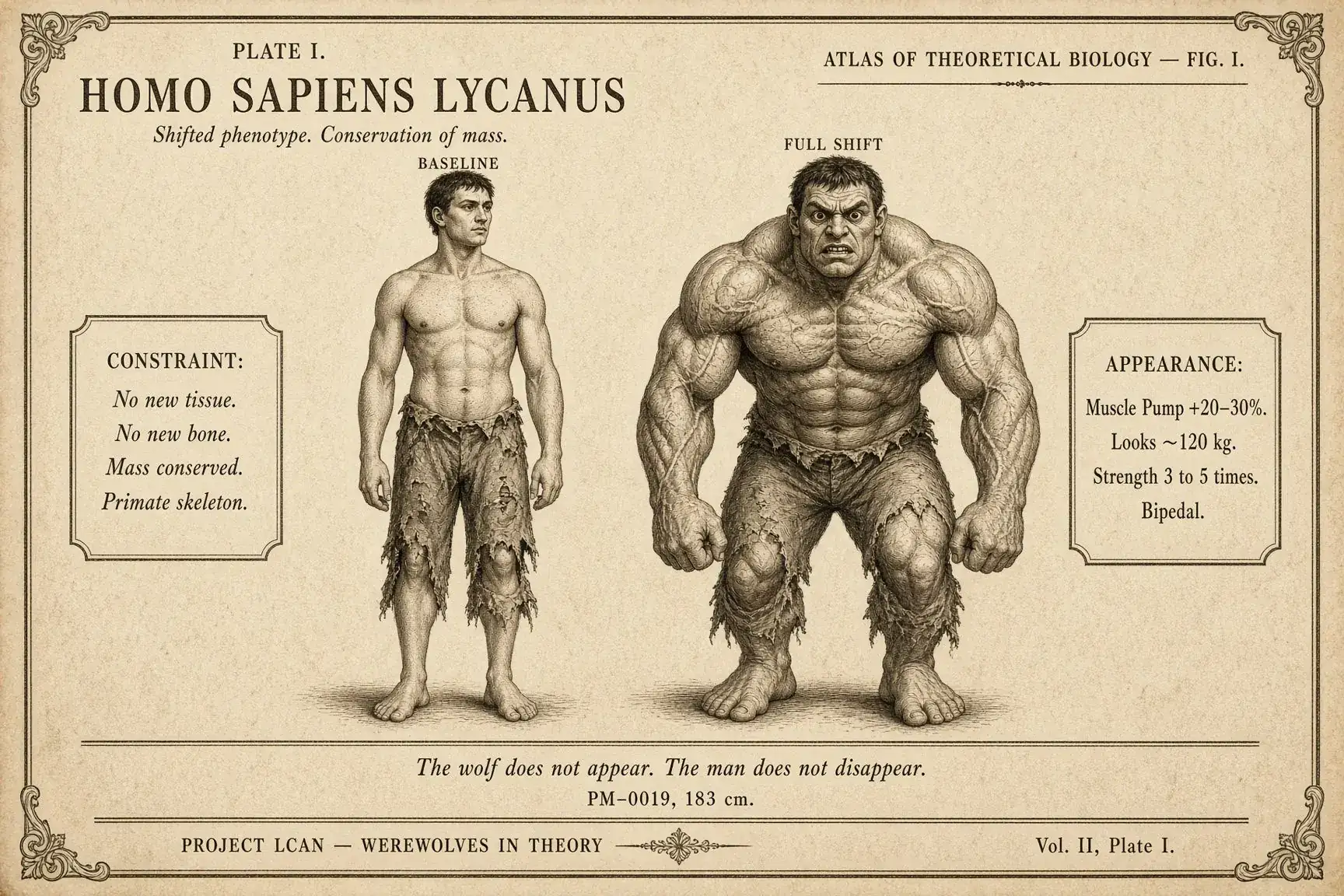
Plate I
Homo sapiens lycanus
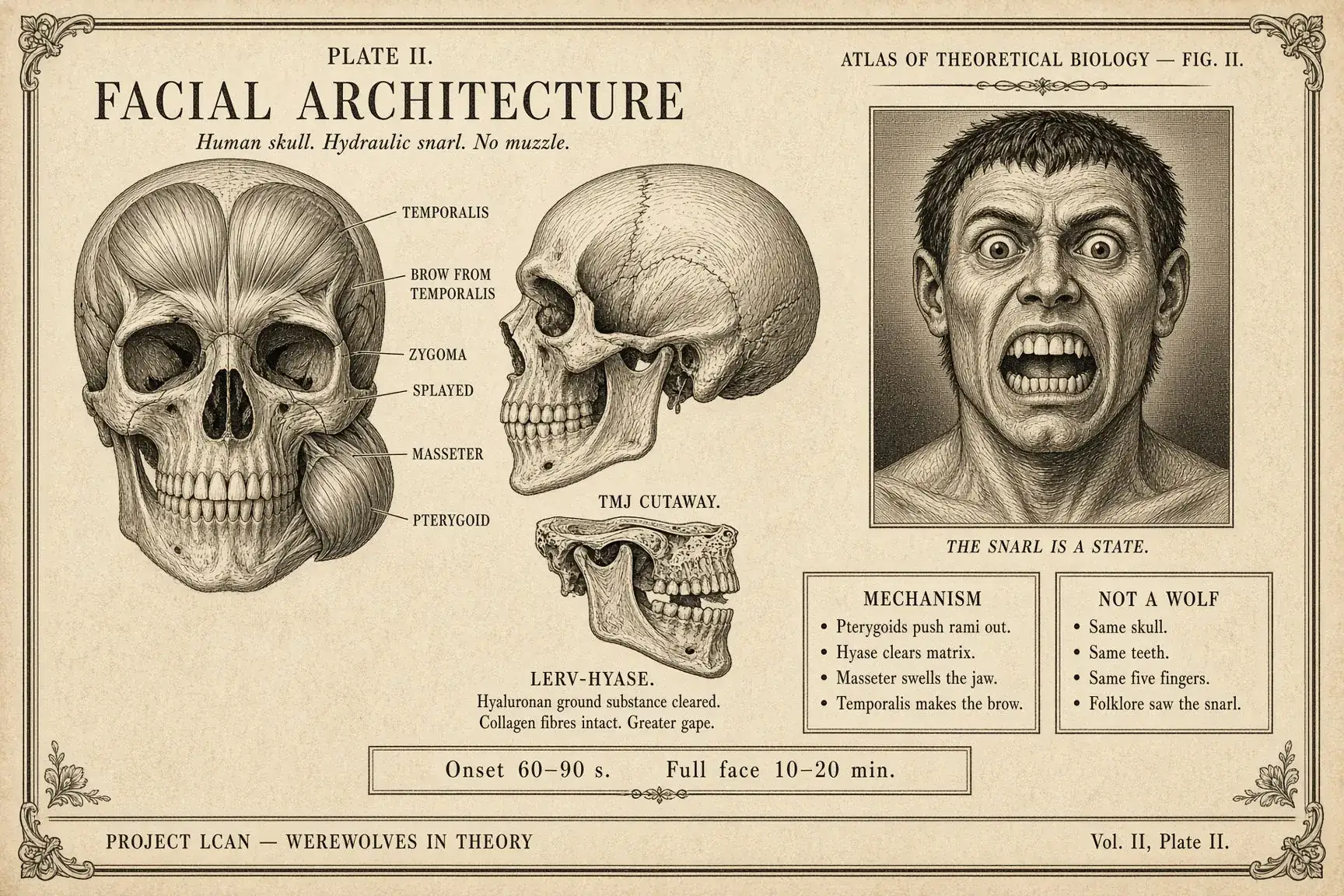
Plate II
Facial architecture
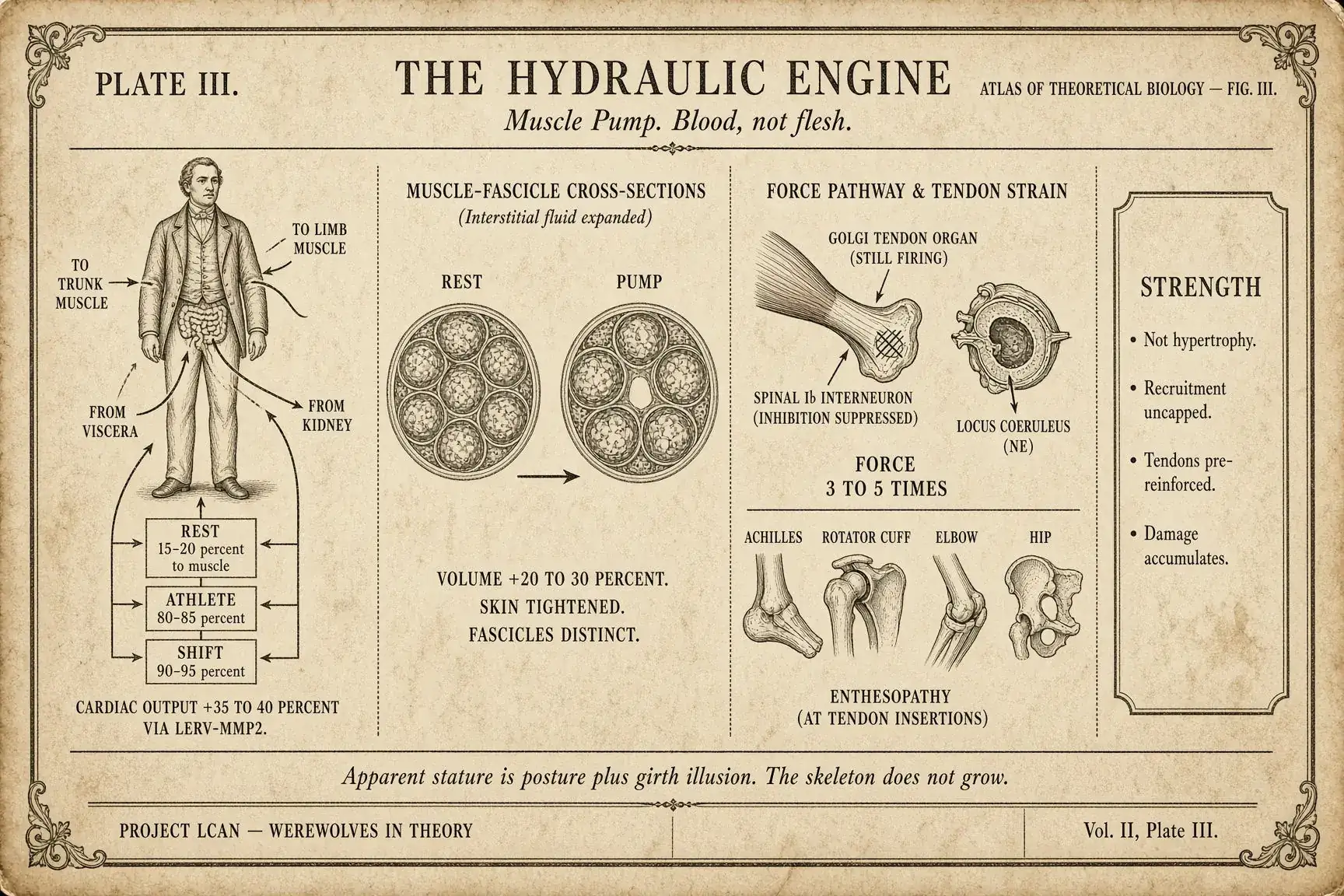
Plate III
The Hydraulic Engine
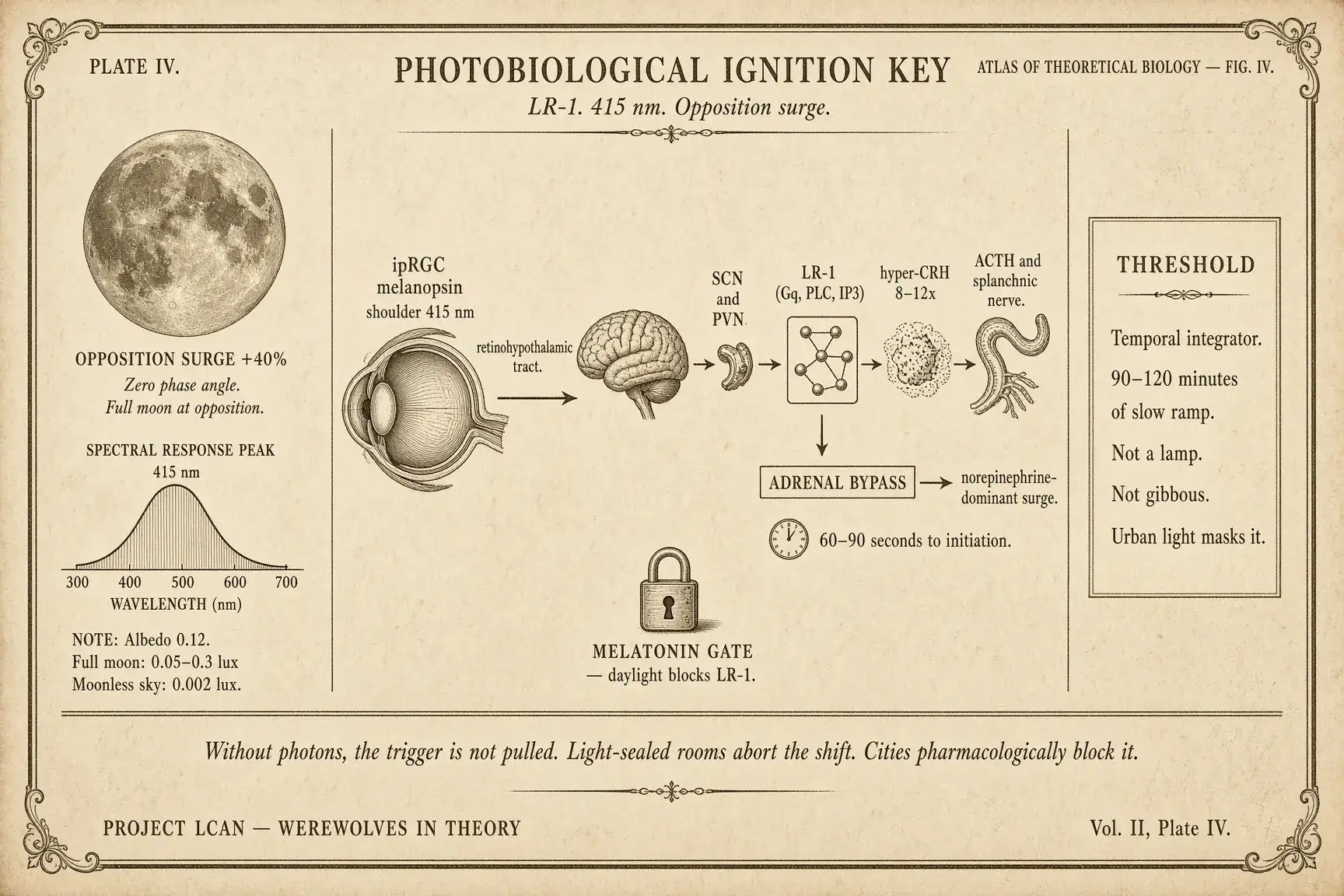
Plate IV
Photobiological ignition key
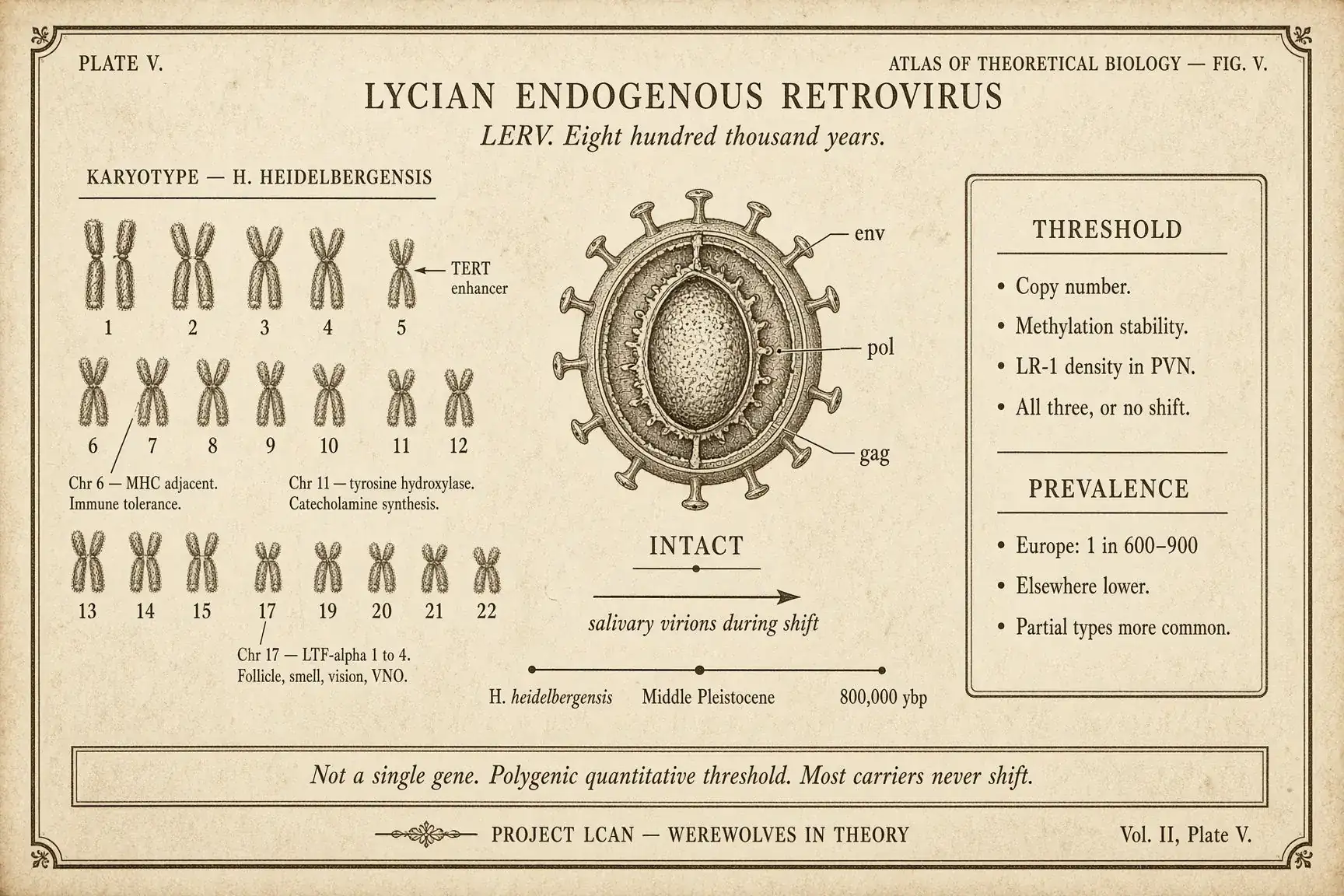
Plate V
Lycian Endogenous Retrovirus
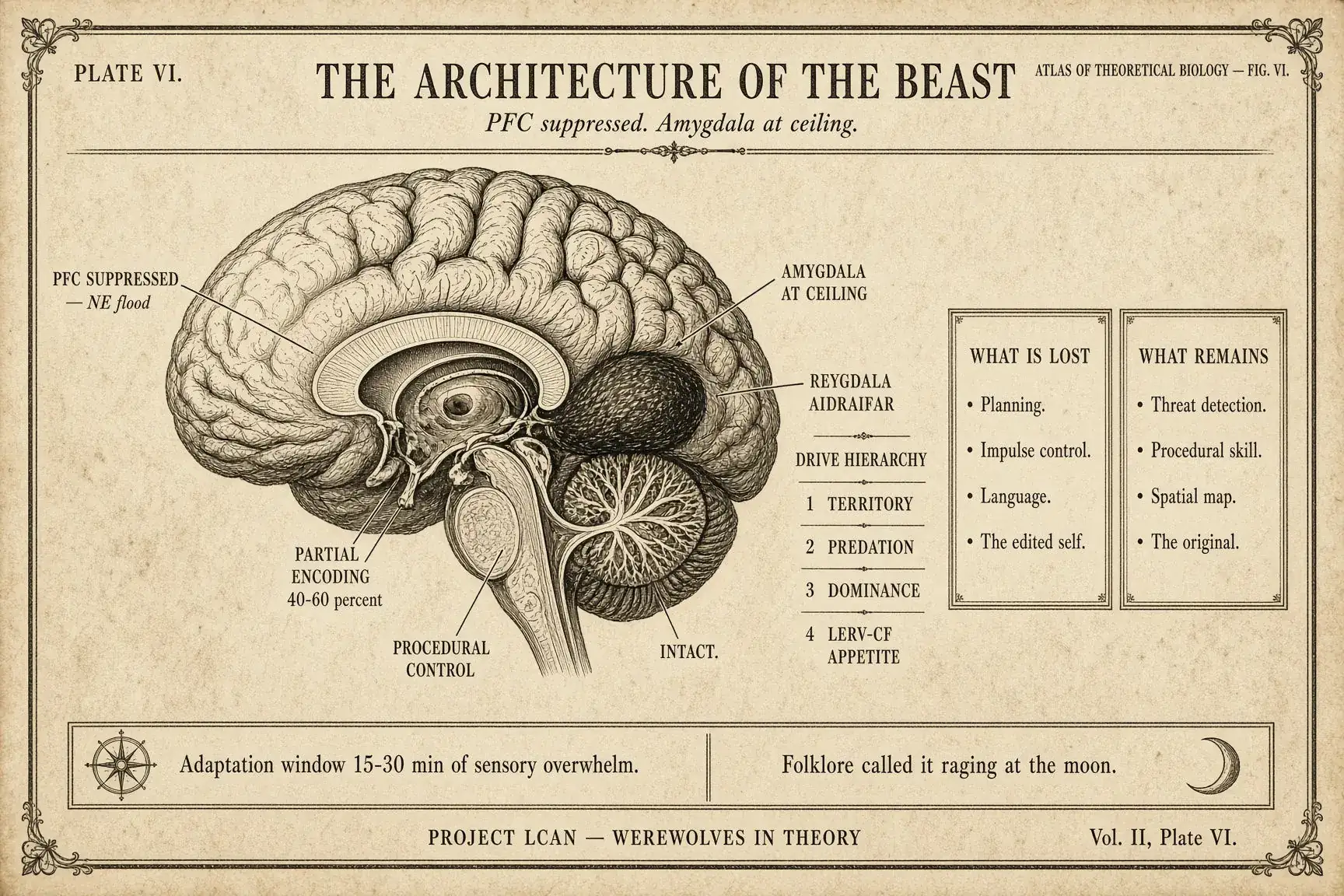
Plate VI
The architecture of the beast
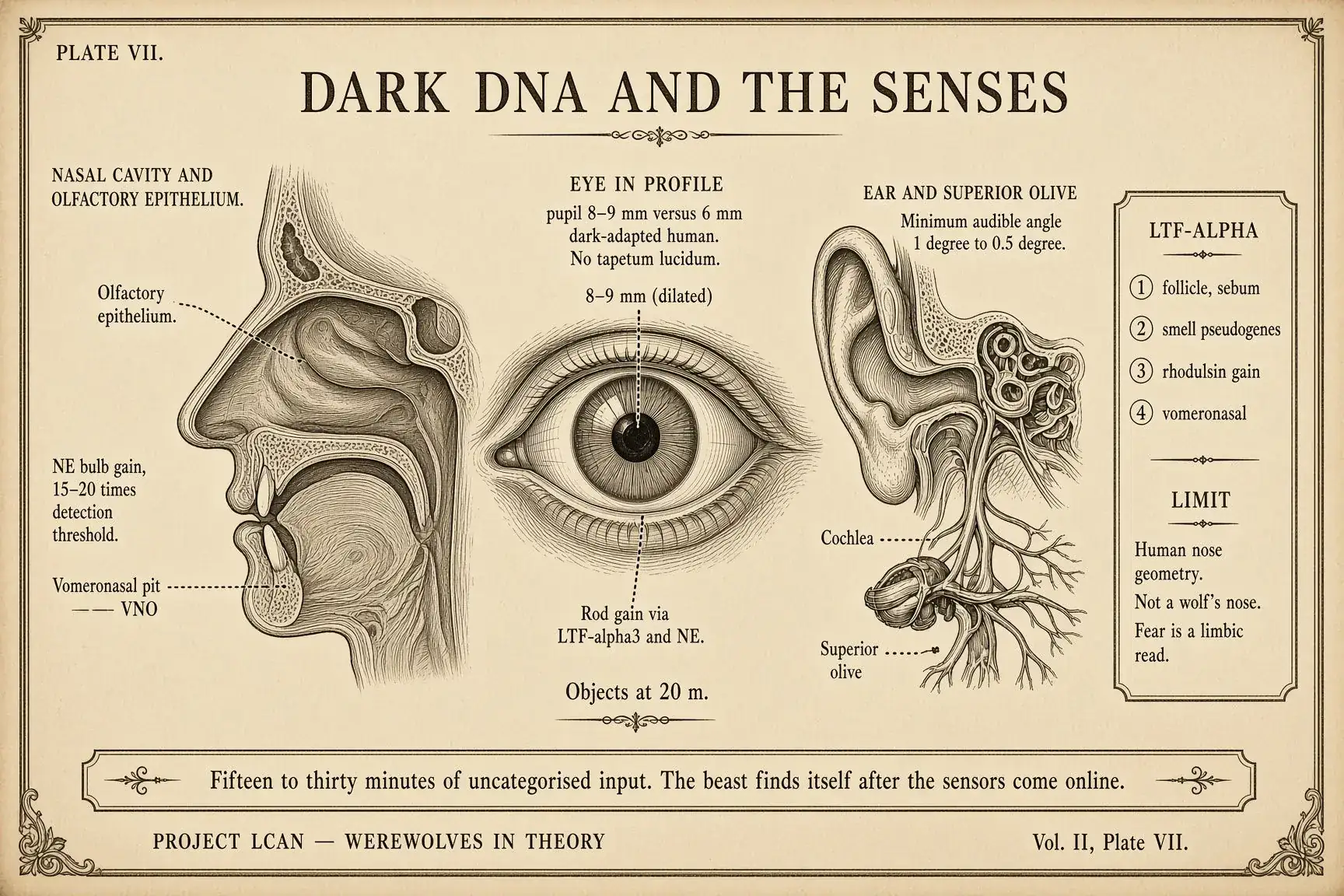
Plate VII
Dark DNA and the senses
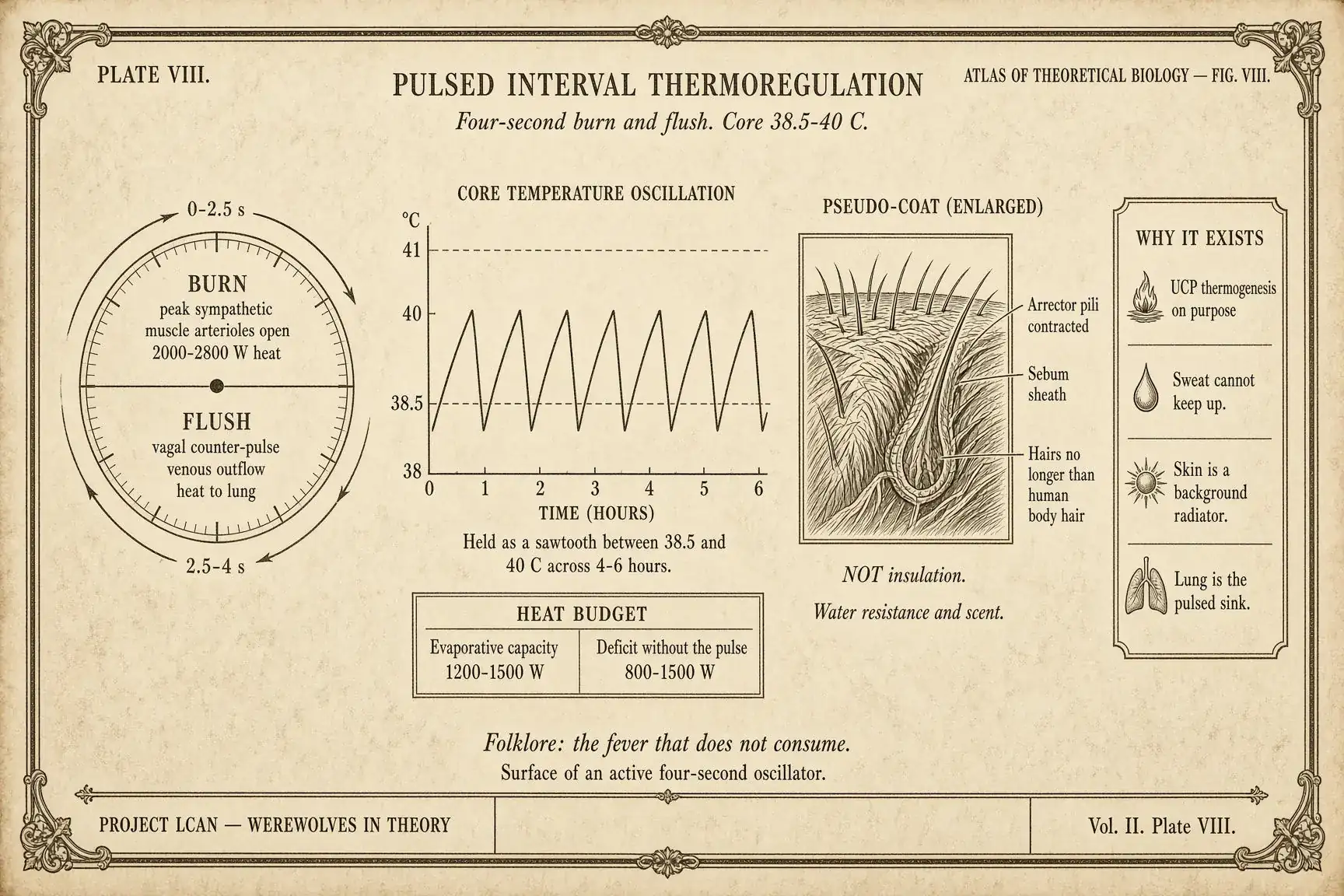
Plate VIII
Pulsed Interval thermoregulation
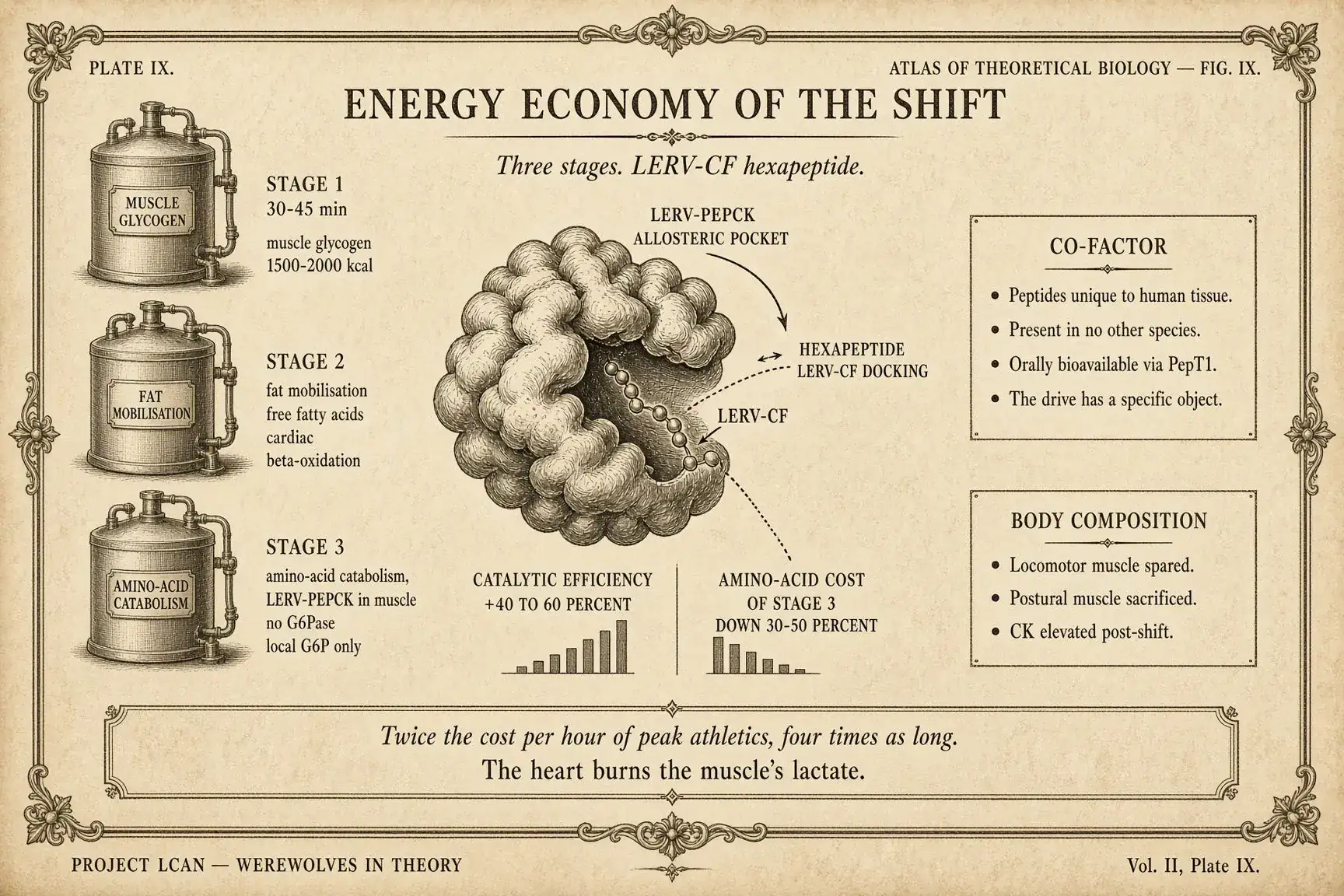
Plate IX
Energy economy of the shift
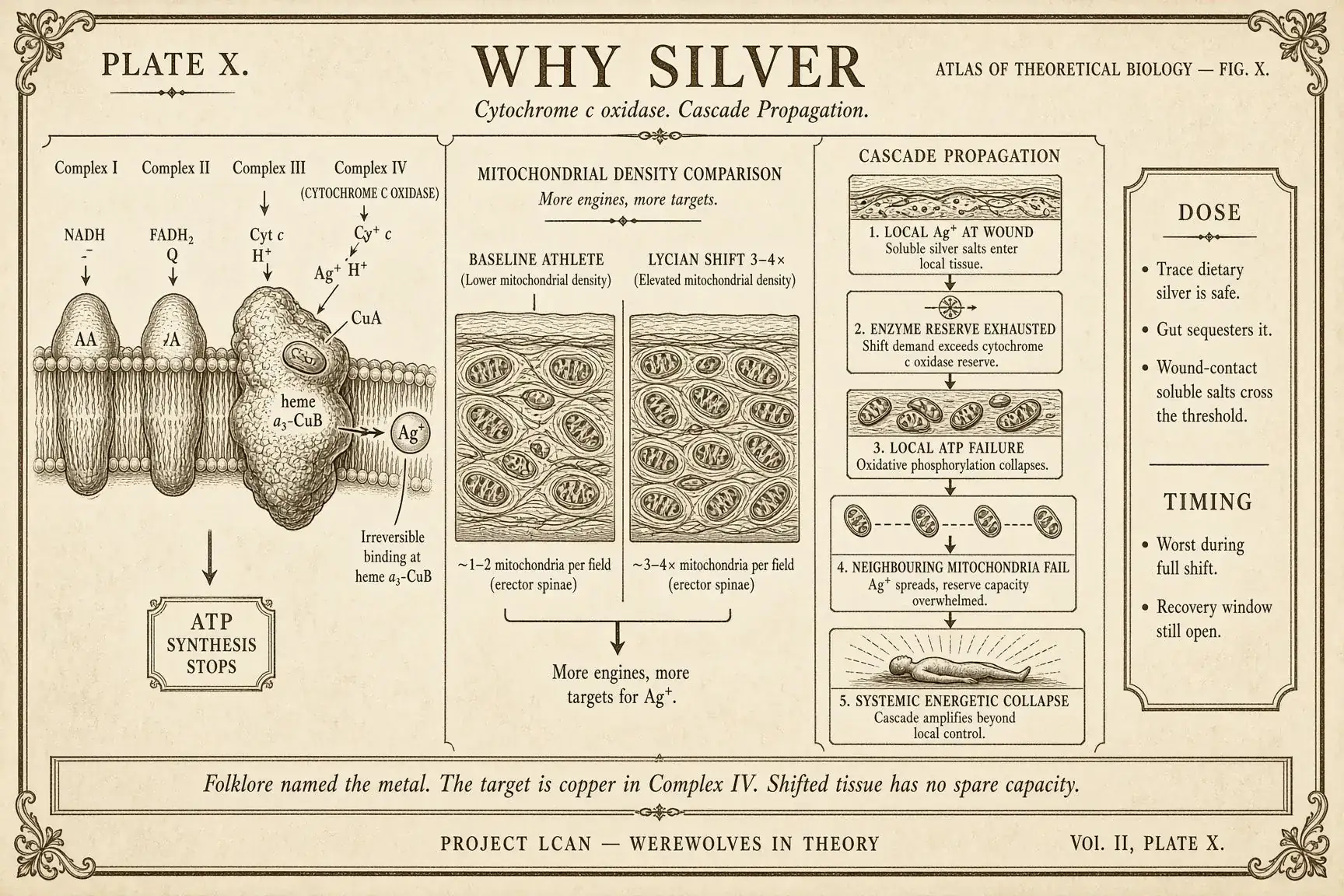
Plate X
Why silver
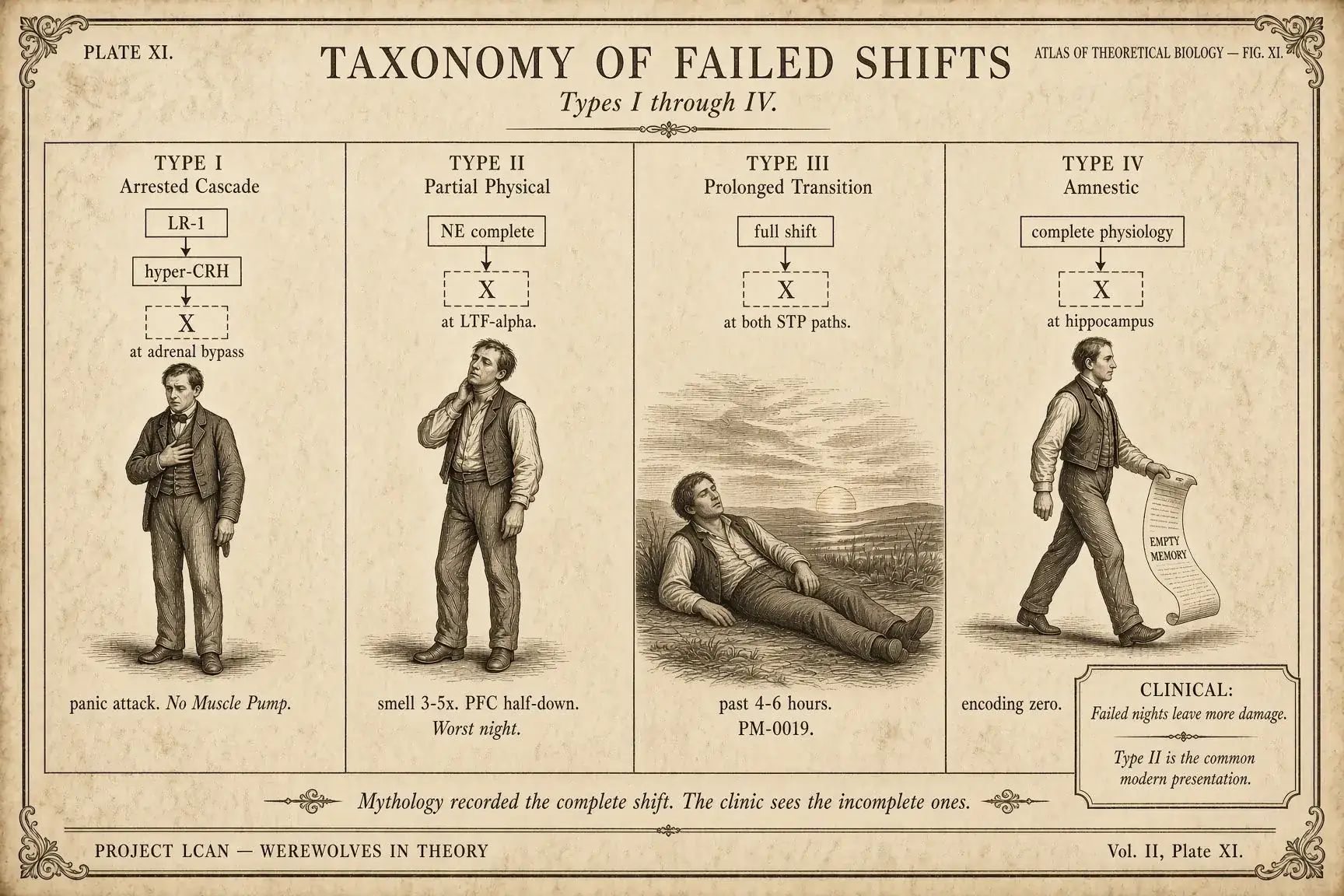
Plate XI
Taxonomy of failed shifts
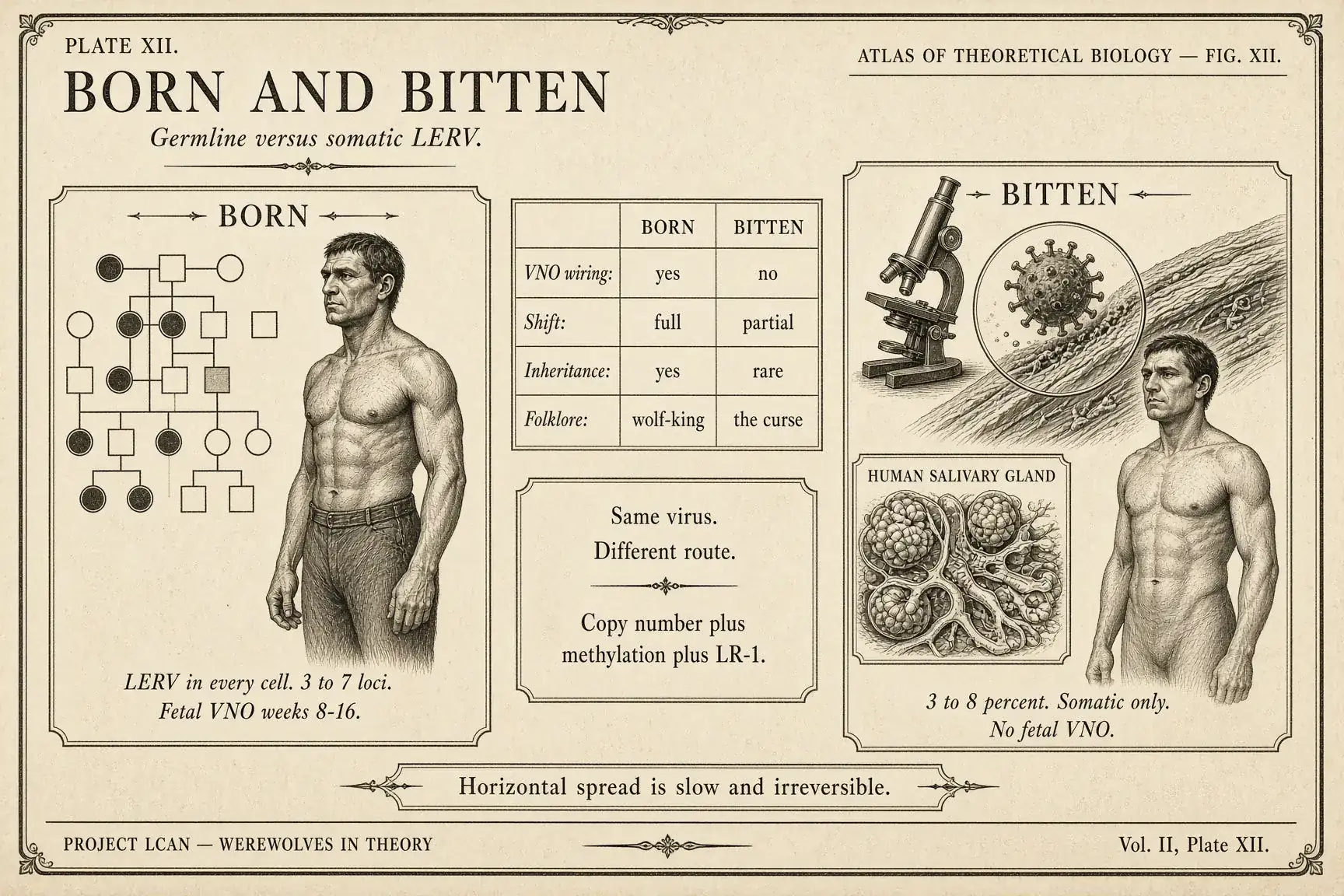
Plate XII
Born and bitten
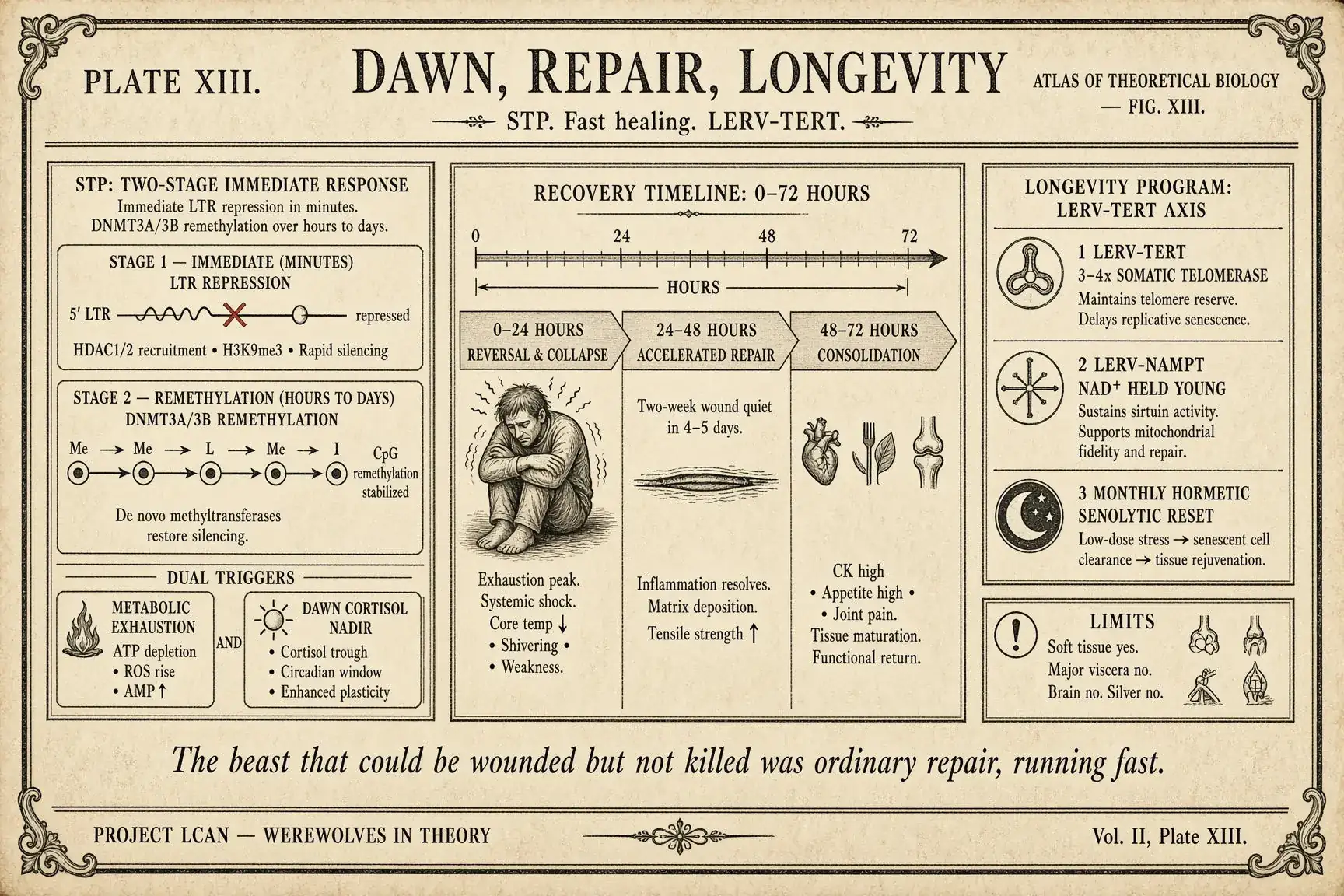
Plate XIII
Dawn, repair, longevity
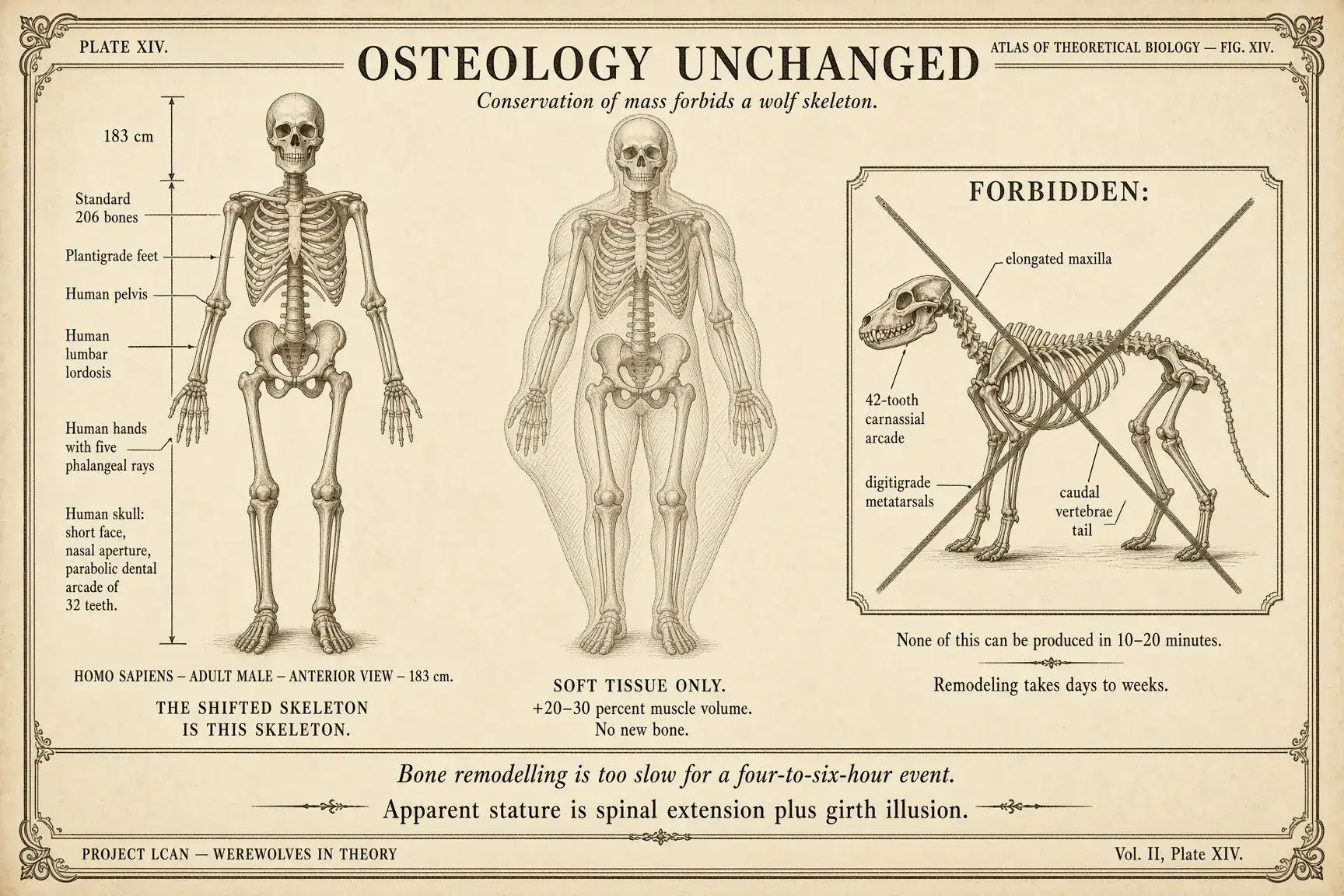
Plate XIV
Osteology unchanged
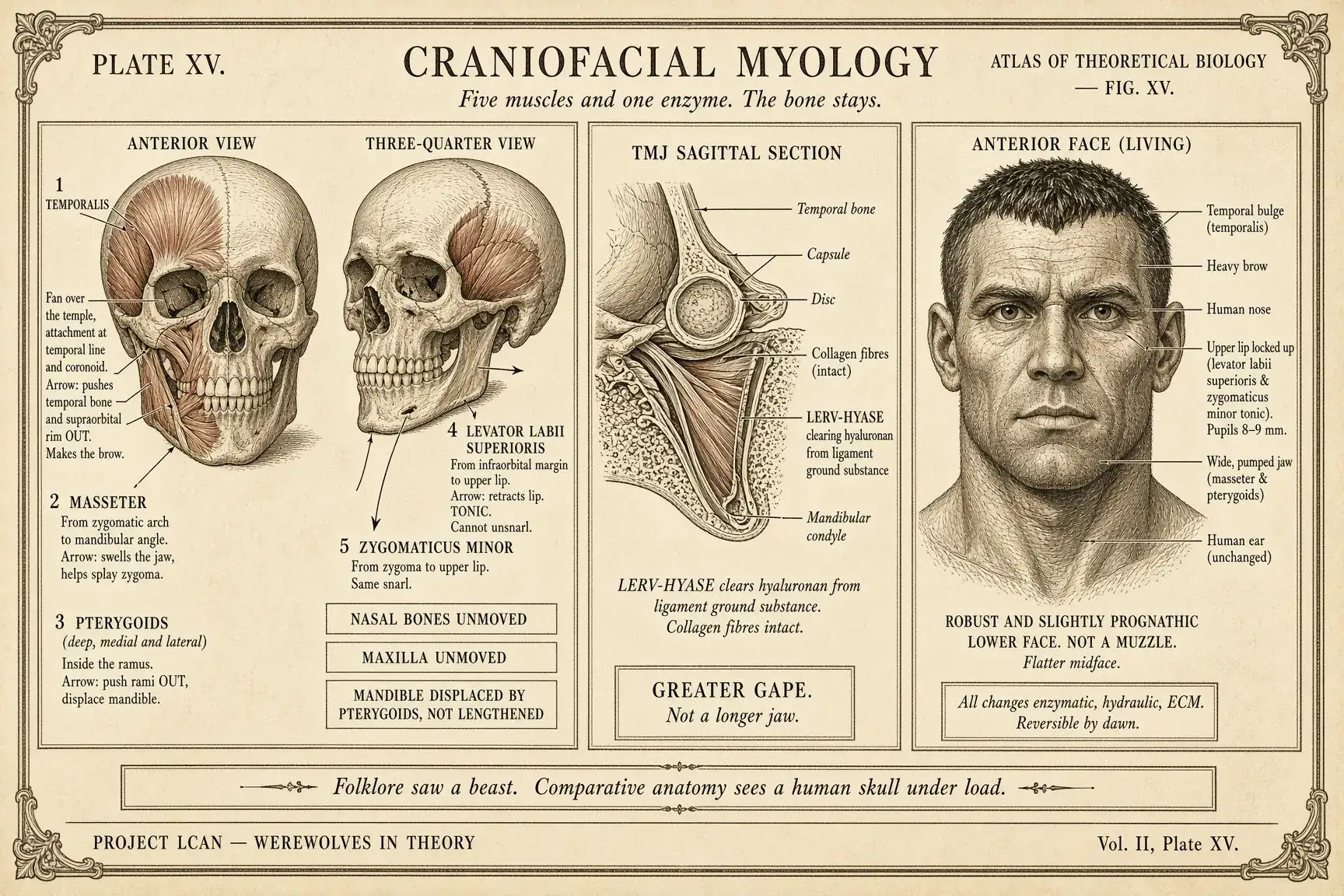
Plate XV
Craniofacial myology
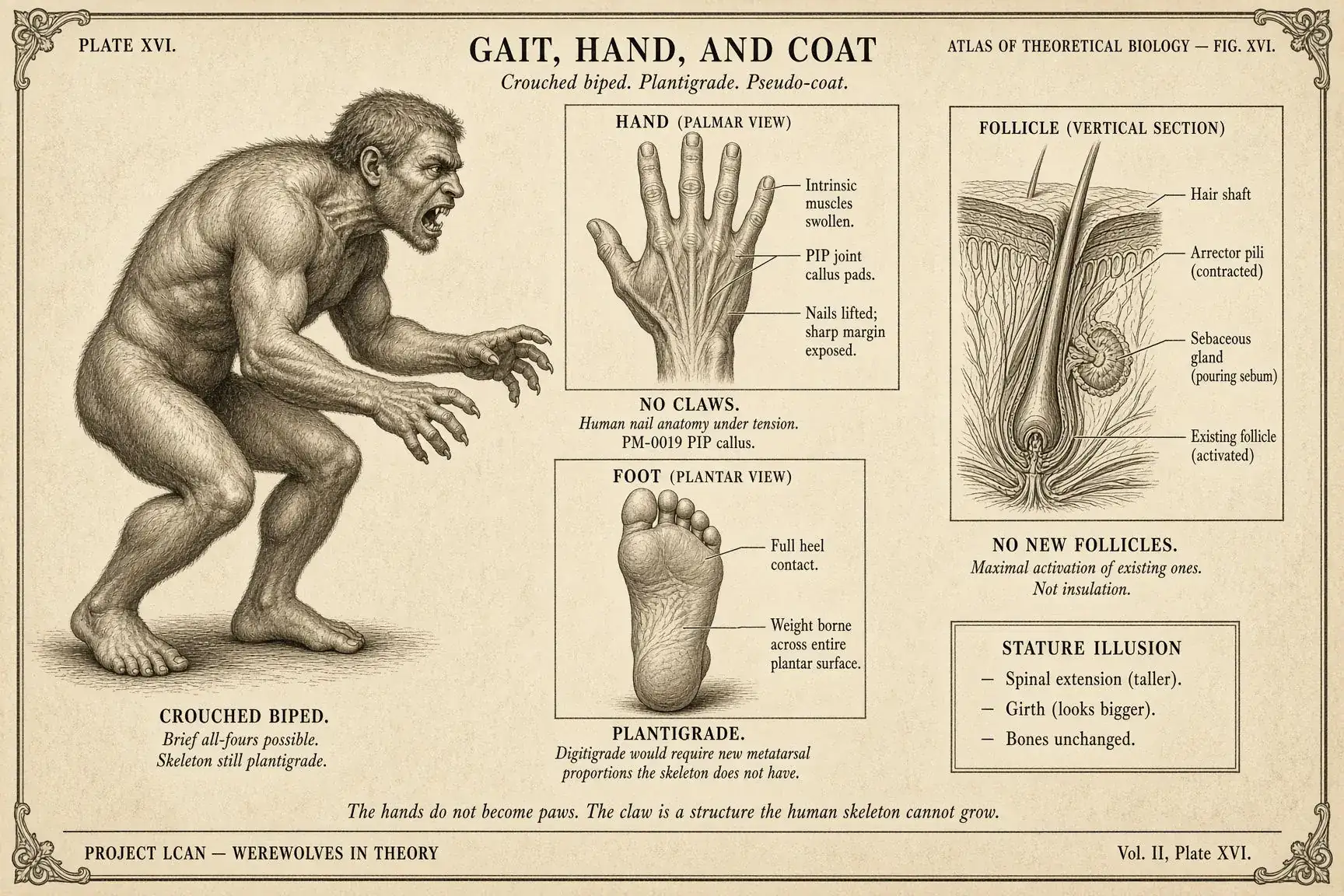
Plate XVI
Gait, hand, and coat
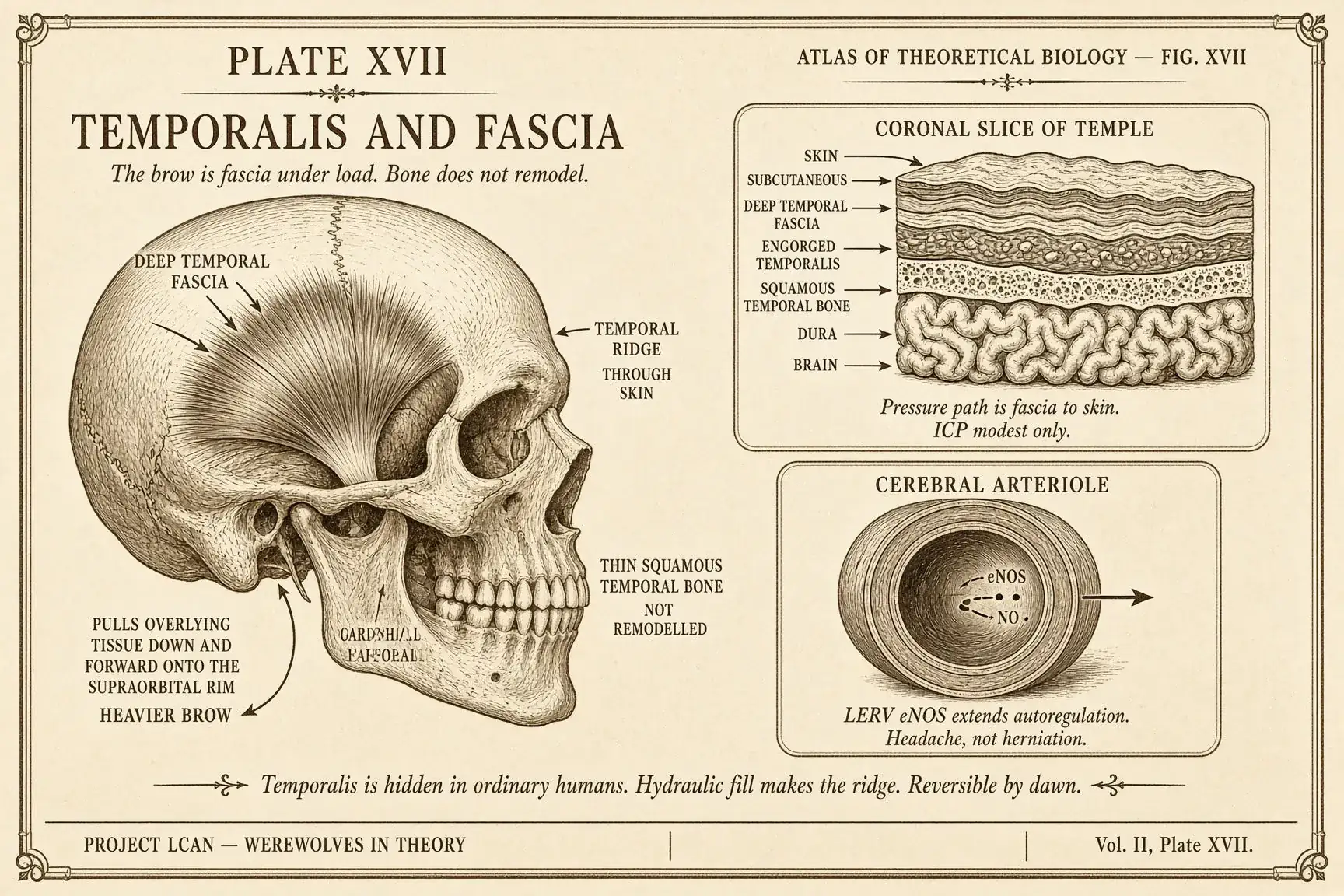
Plate XVII
Temporalis and fascia
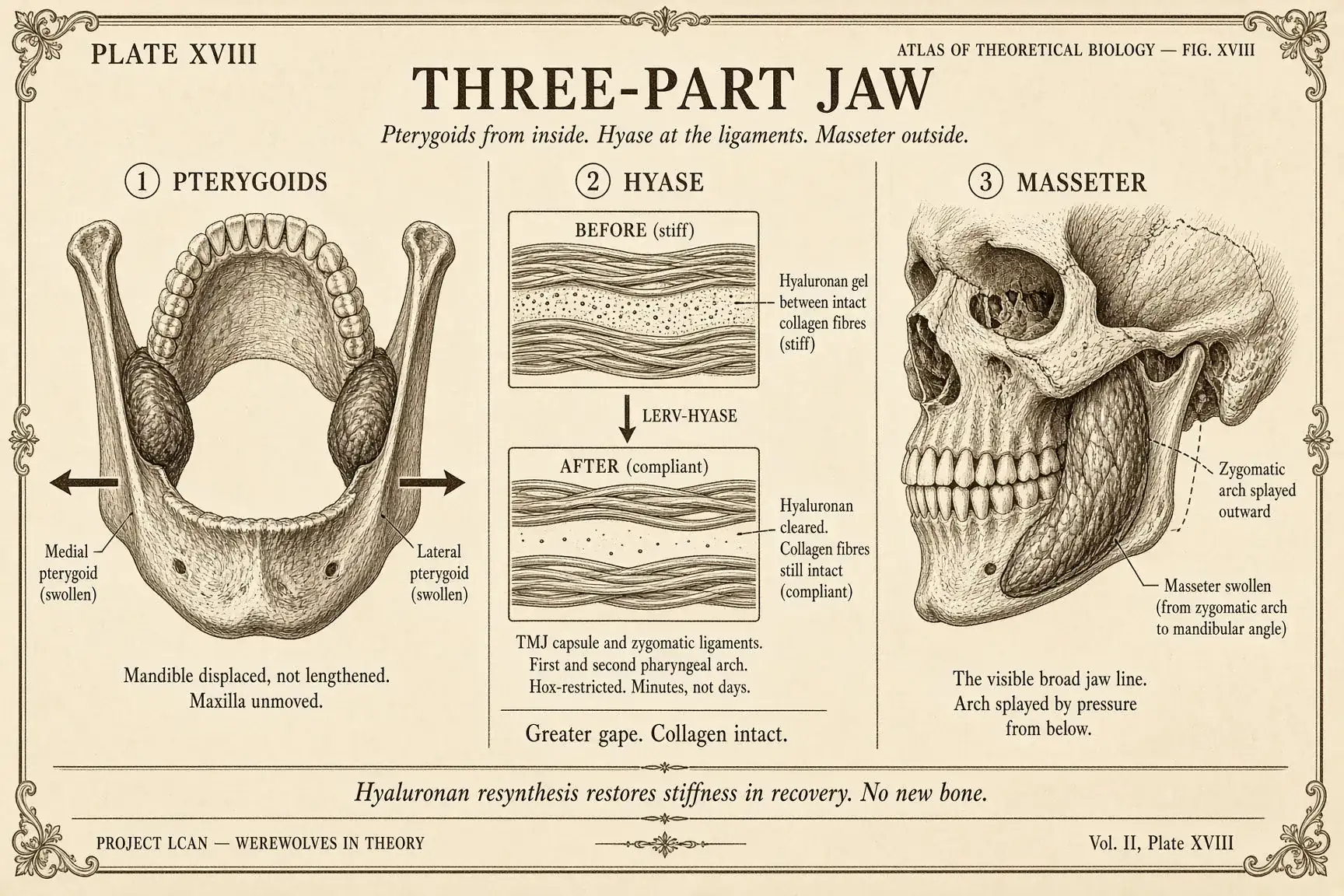
Plate XVIII
Three-part jaw
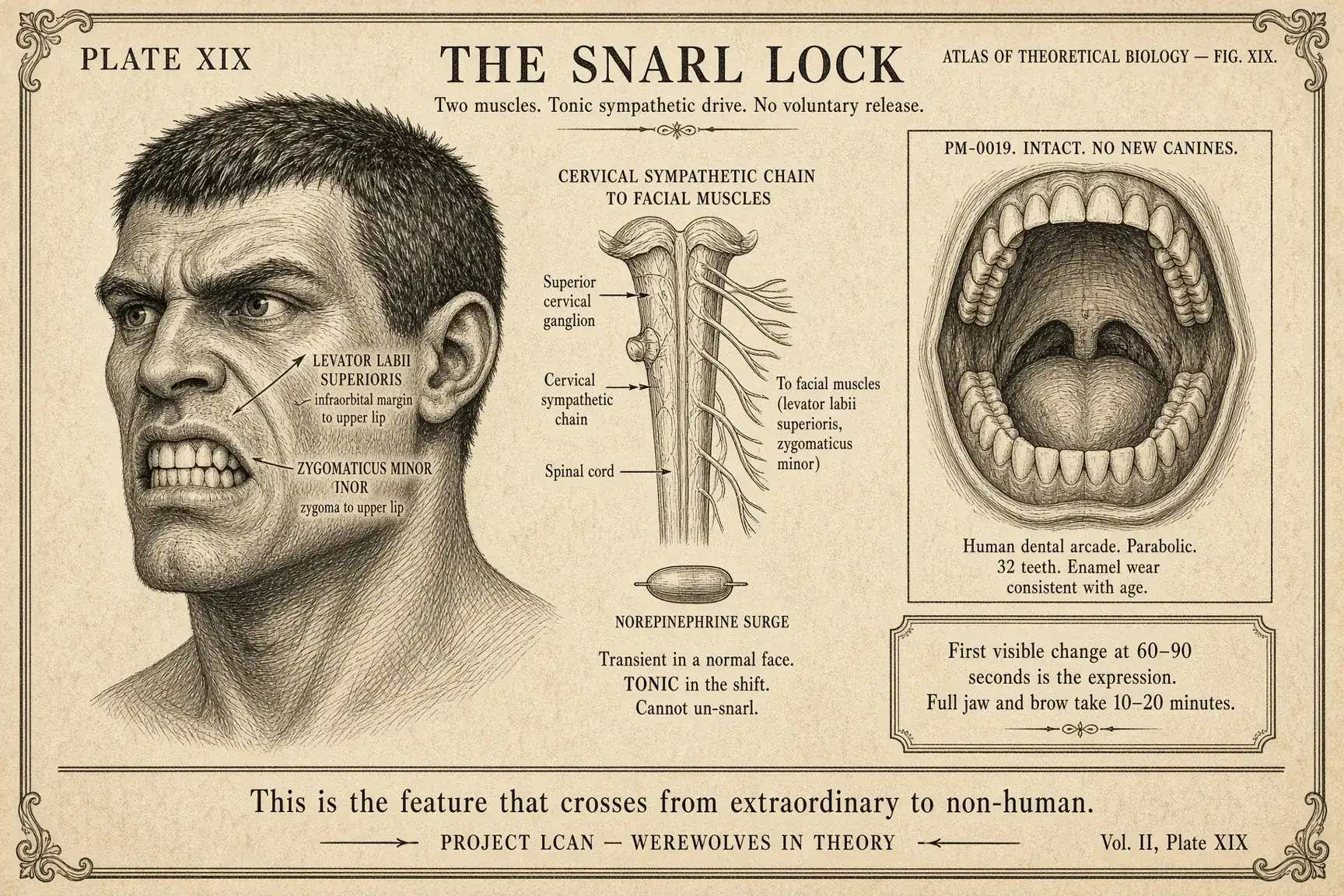
Plate XIX
The snarl lock
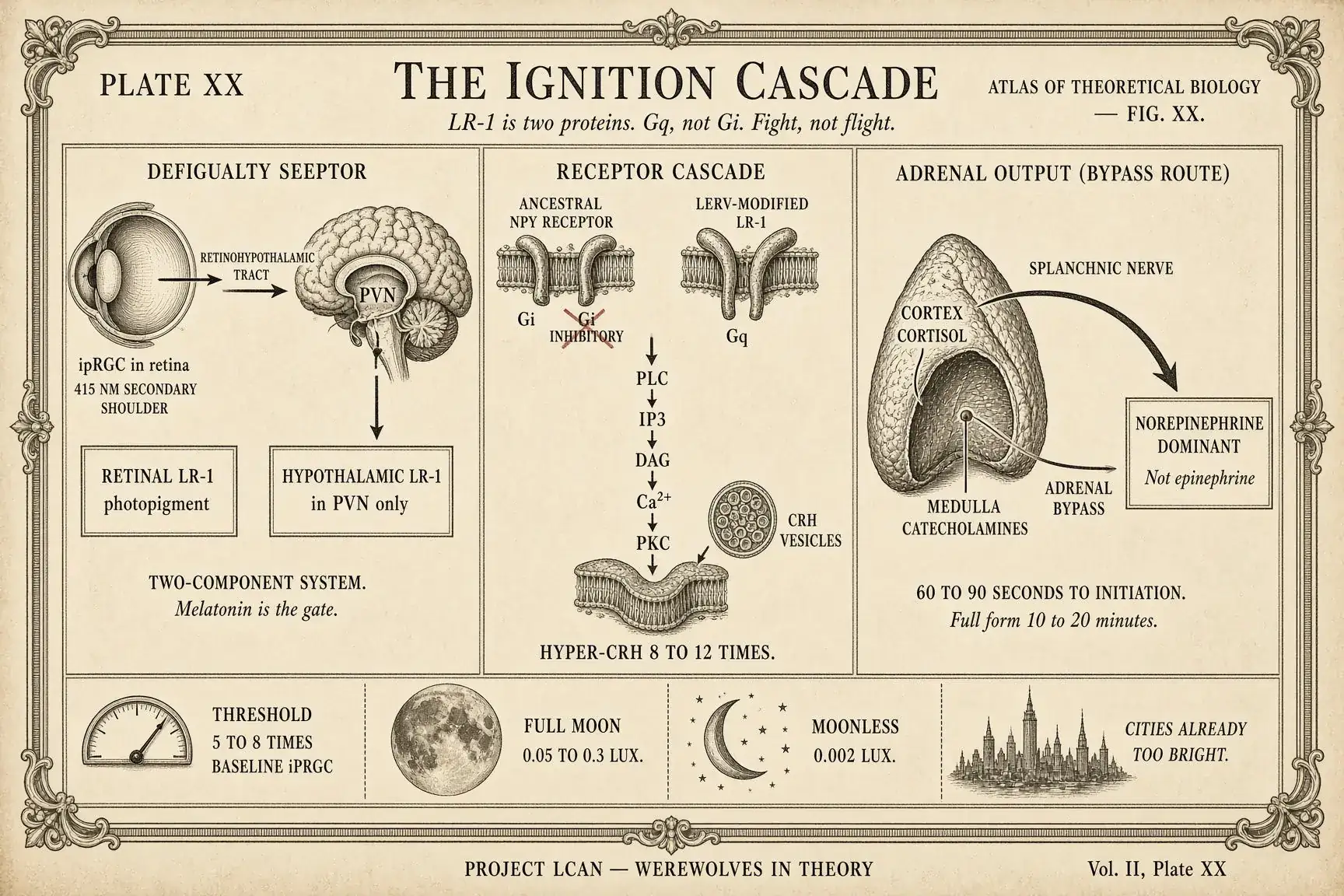
Plate XX
The ignition cascade
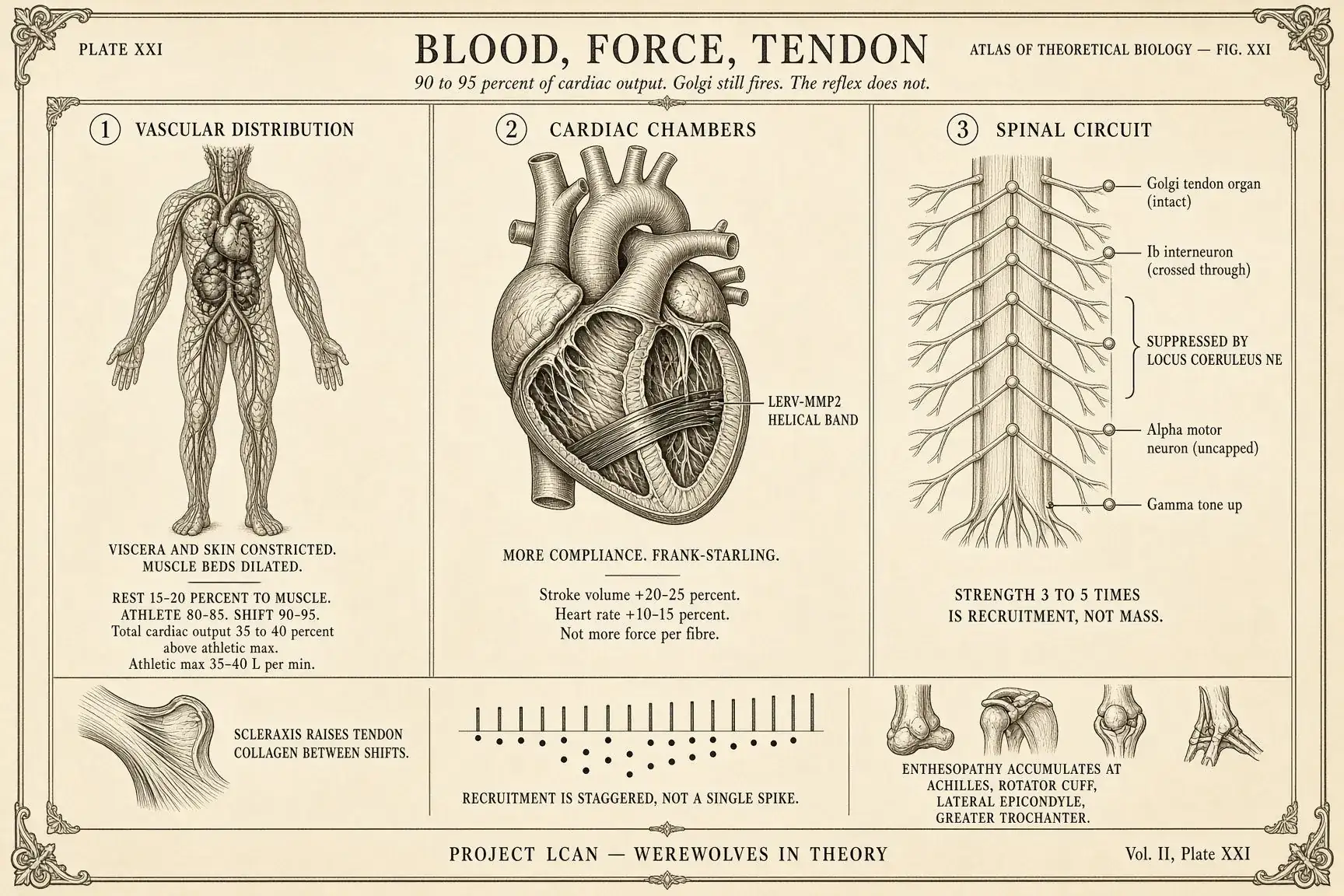
Plate XXI
Blood, force, tendon
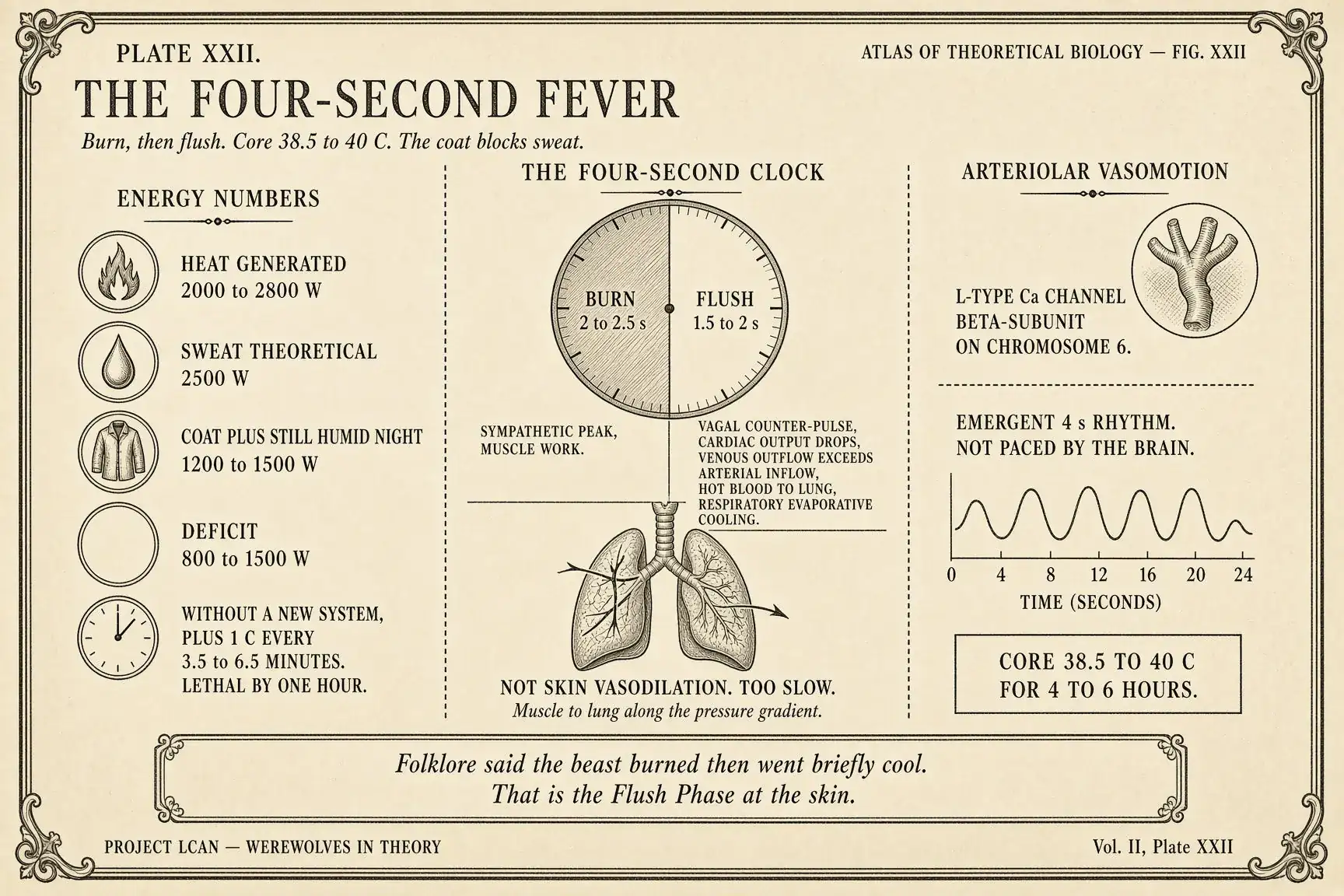
Plate XXII
The four-second fever
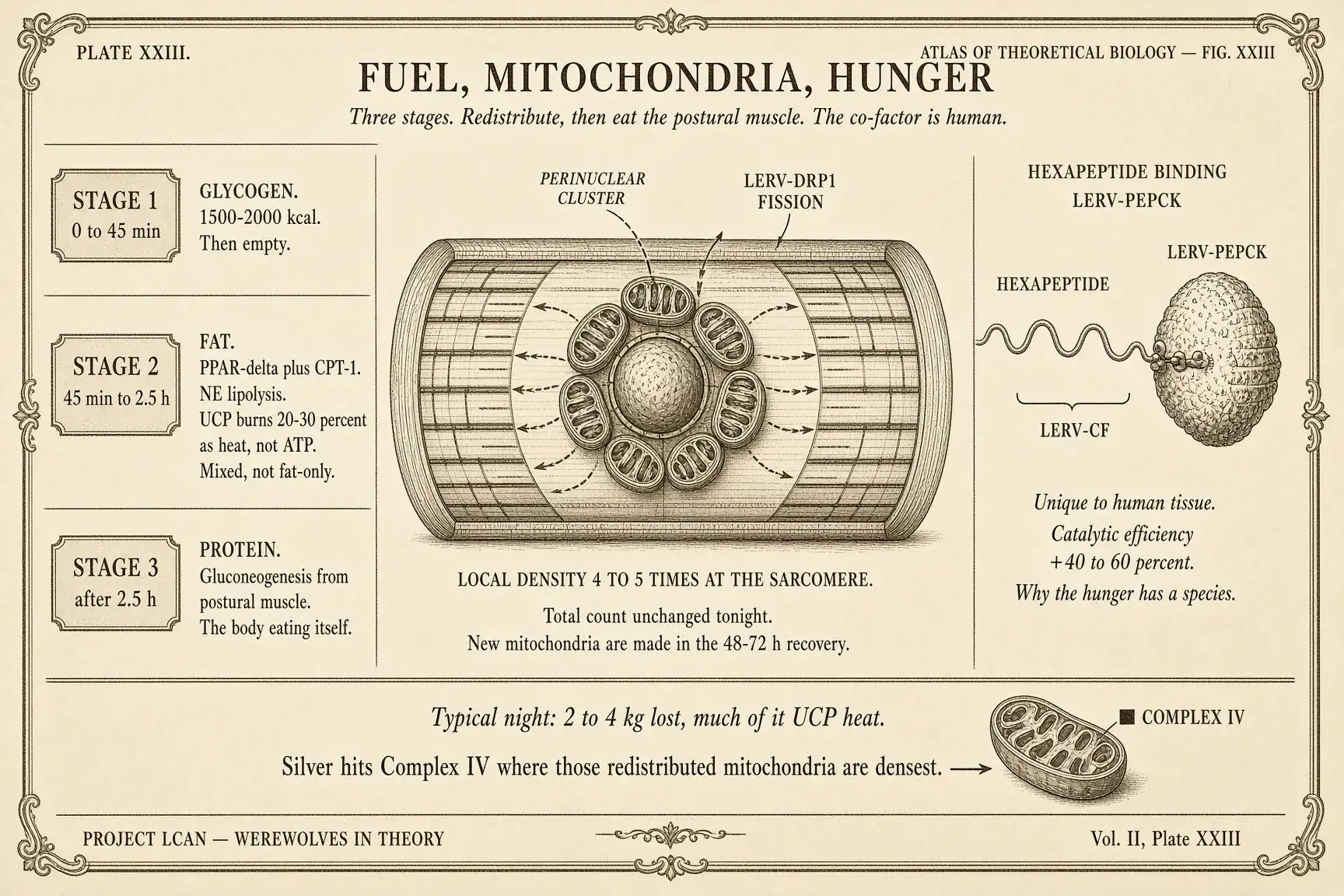
Plate XXIII
Fuel, mitochondria, hunger
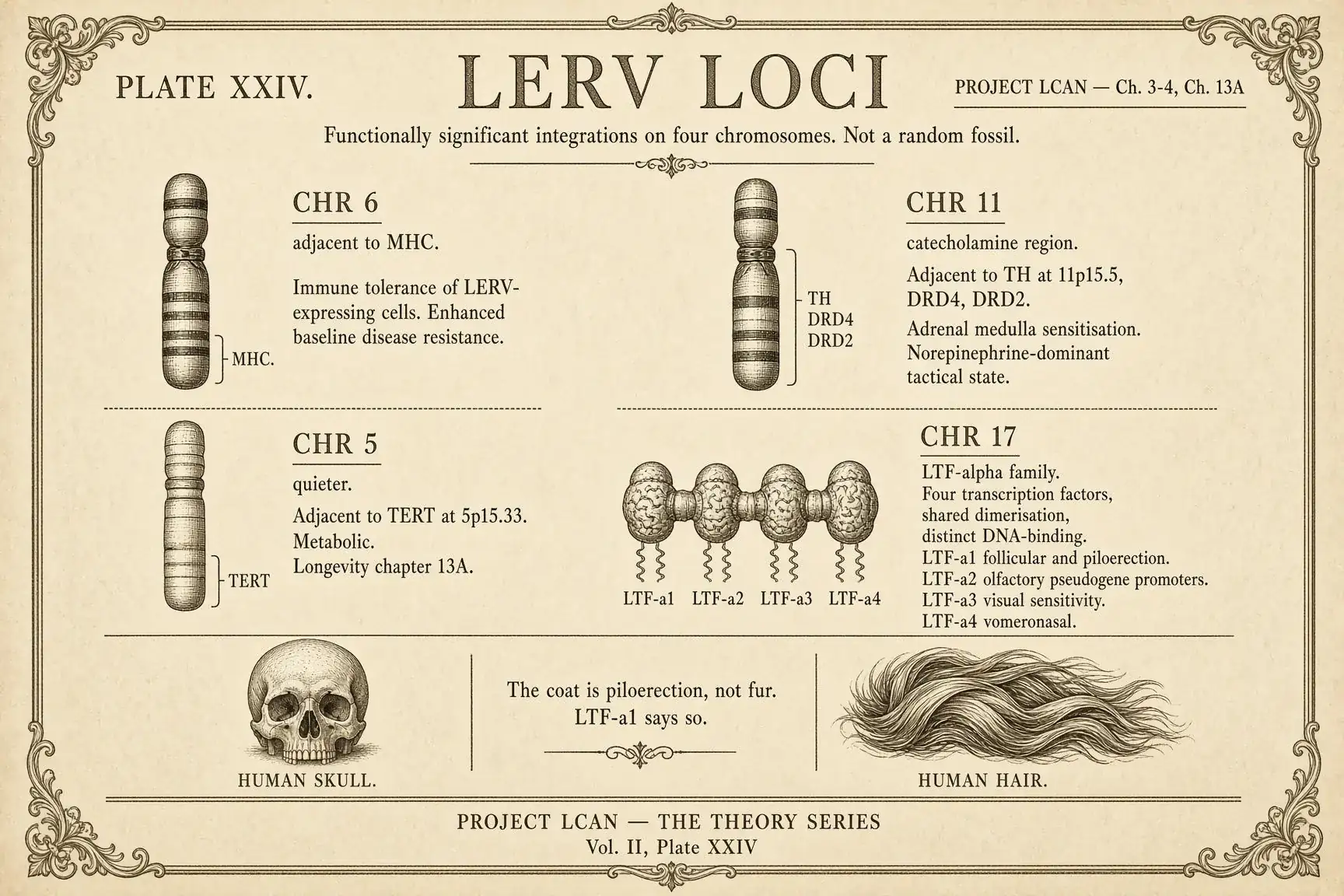
Plate XXIV
LERV loci
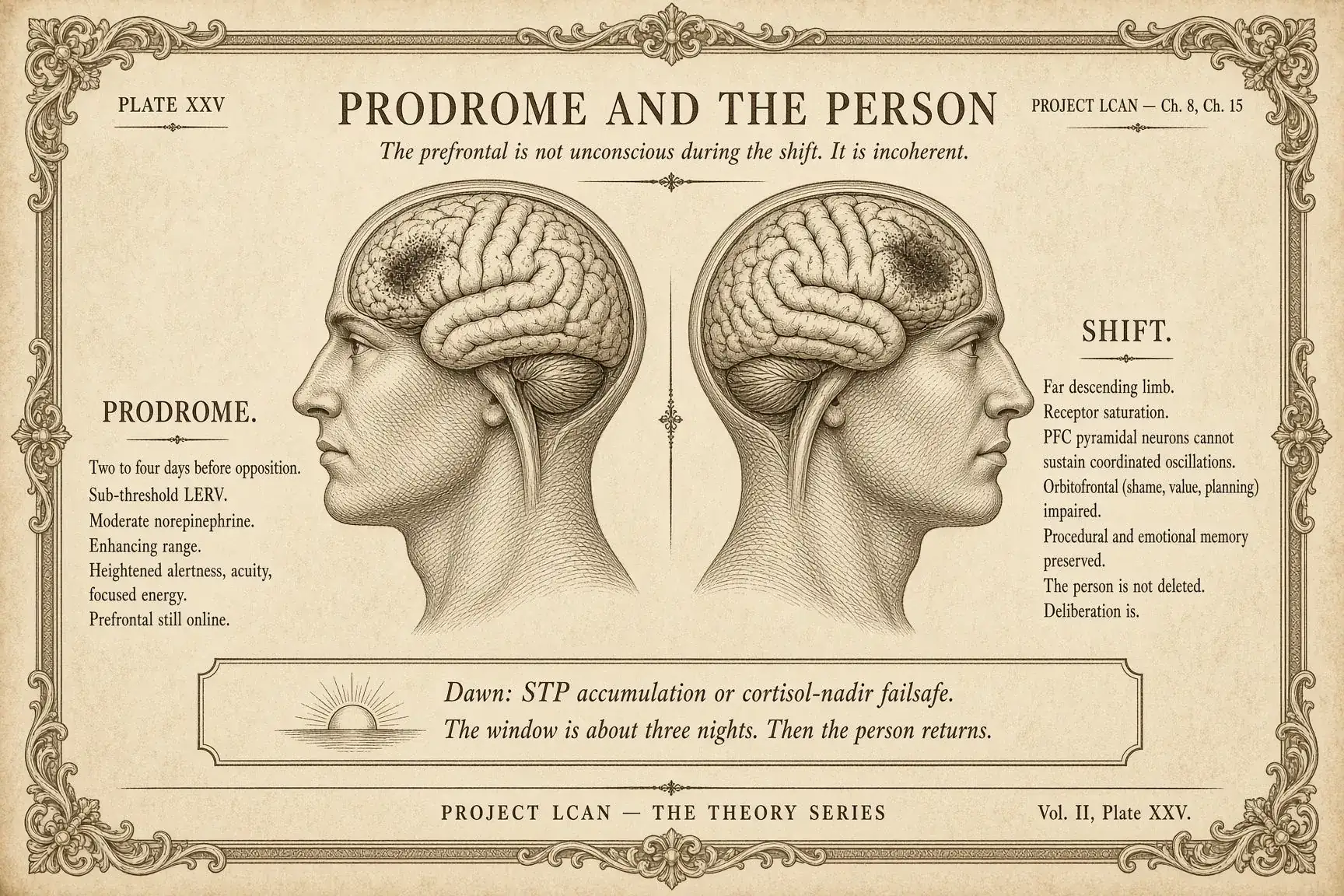
Plate XXV
Prodrome and the person
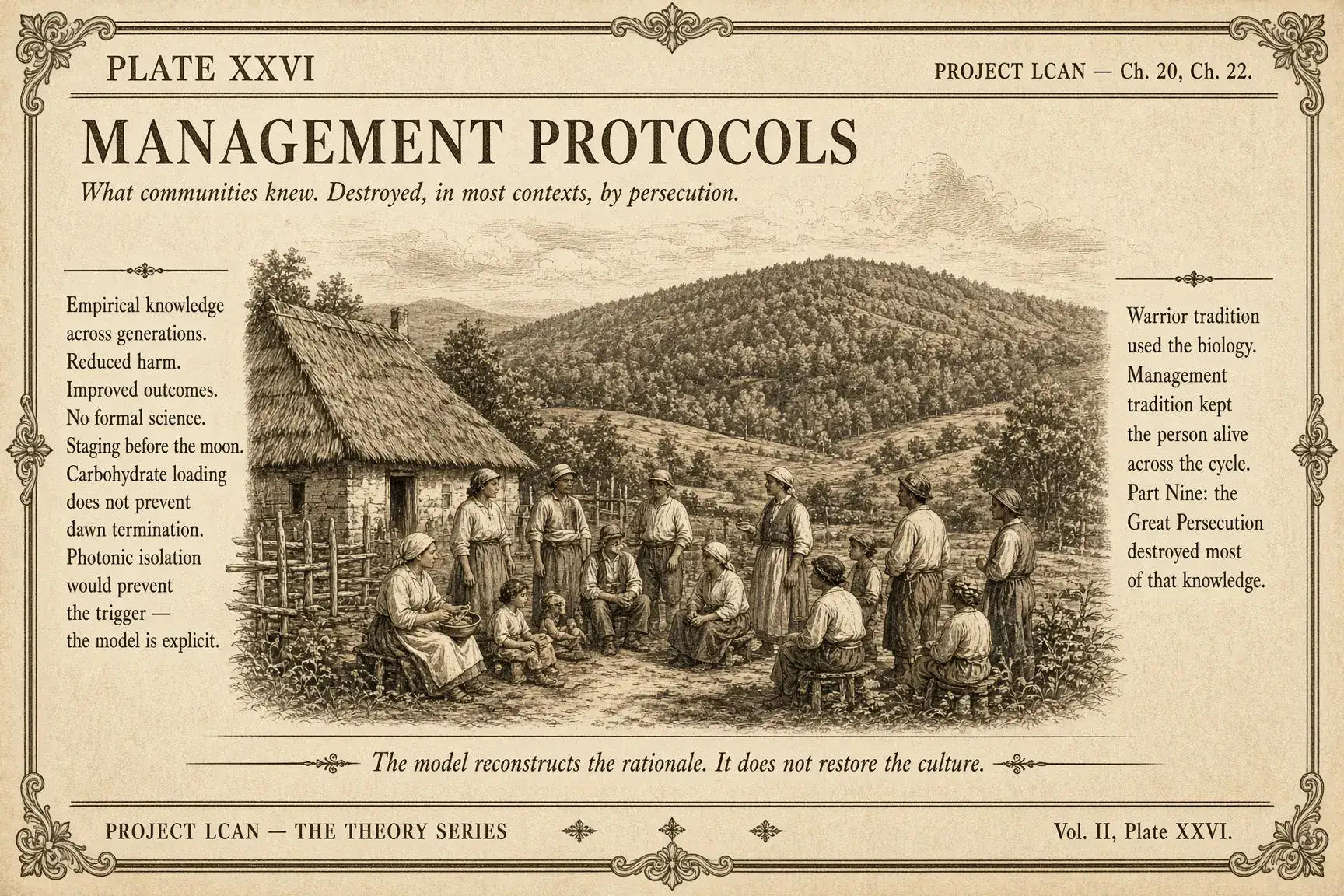
Plate XXVI
Management protocols
26 copperplates for Werewolves. Specs live on the plate. Open the atlas
Table of contents
Parts One–Two — Trigger / Genetics
The moon is geometry and spectrum at LR-1. LERV is already in the germline.
Part Three — The shift
The wolf does not appear. The man does not disappear. No mass is created. Hydraulic engine on a human skeleton.
Parts Four–Six — Neurology / energy / failure
What remains of the person; the cost of dawn; failed-shift Types I–IV.
Part Seven — Vulnerabilities
Silver hits cytochrome c oxidase — a second route, not the haemophage short.
Parts Eight–Twelve — History to the unanswerable
Warrior tradition, persecution, identity, the Anthropocene.
For the research group. You know who you were. The compiler hopes some of you still are.
A separate compiler. Dedicated to the research group. The compiler hopes some of them still are.
Start with these plates
Engine primer
Engine primer
Science pillars
The wolf does not appear. The man does not disappear. No mass is created. Vascular redistribution and tonic contraction on a human skeleton: crouched hyper-muscular biped, keratin-shaft coat. Four-second burn-and-flush.
An LR-1 receptor variant on intrinsically photosensitive retinal ganglion cells. Geometry plus spectrum at opposition. Not a curse. A wavelength.
Lycian Endogenous Retrovirus. Integrated in the lineage ancestral to sapiens and neanderthalensis. Approximately eight hundred thousand years. Approximately eight per cent of the human genome is already retroviral. LERV is the one that still fires.
Cytochrome c oxidase inhibition amplified by Lycian mitochondrial density. Same metal as the haemophage vulnerability. Different molecular target. Not the HHDRV galvanic short.
Type I abortive; Type II partial somatic; Type III locked; Type IV catastrophic. Clinical taxonomy, not flavour. The complete shift is the minority report.
The shift reverses. The cost does not. Exhaustion, CK elevation, and the clinical misdiagnoses that have buried the phenotype in plain sight.
From this volume
ipRGC–PVN axis · LCAN Ch. 1
The full moon. Any bright night. A calendar curse.
Germline · LCAN Ch. 3
A bloodline. A family curse. The bite that spreads.
Wound and marrow · LCAN Ch. 4
One bite and the curse is yours.
Skeletal muscle bed · LCAN Ch. 5
The man becomes a wolf. Quadruped. Forty kilograms of extra mass from nowhere.
Craniofacial ligaments · LCAN Ch. 5.3
The snout. The wolf's head.
Cutaneous flush · LCAN Ch. 6.1
Steam off the back. Heat like a furnace. Then the pelt.
Follicle · LCAN Ch. 6.2
Fur. A pelt that was not there at dusk.
Olfactory epithelium and vomeronasal remnant · LCAN Ch. 7
They tracked you through the woods. They knew you in the dark.
Prefrontal cortex · LCAN Ch. 8
The man is gone. The beast remains. Lost time.
Myocardium · LCAN Ch. 11.0
A heart that should have burst.
Liver and muscle glycogen · LCAN Ch. 11.1
Insatiable hunger after. Meat. Sugar. Collapse.
Whole organism · LCAN Ch. 12
They wake naked in a field. They remember nothing. They can barely stand.
Periphery, not brain · LCAN Ch. 13
They knit as you watch. Invulnerable.
Senescent cells · LCAN Ch. 13A
The old ones who do not look old.
Cascade · LCAN Ch. 14
Clinical lycanthropy. Panic under the moon. A man who thought he was an animal.
Cytochrome c oxidase · LCAN Ch. 16
The same metal. Therefore the same creature.
ipRGC / 415 nm · LCAN App. G
Stay indoors. Draw the curtains. Fear the moon.
Opposition geometry · LCAN Ch. 1–2
Only the full moon. Any bright night. Superstition about the calendar.
Vomeronasal remnant · LCAN Ch. 7.2
The beast can smell your fear.
Pupil and rod · LCAN Ch. 7.3
Eyes that shine. Hearing the grass move. Night-beasts.
Tendon insertions · LCAN Ch. 21 · PM-0019
A warrior's bones. Marks of a hard life. Nothing a coroner could name.
Wound · LCAN Ch. 17
A silver bullet. A silver blade. The creature falls.
Primary documents
Full texts remain in the printed volumes. These are the designations.
Printed appendices
Book 2 form
Subject was recovered at 06:14 by a dog walker whose animal had left the path. The subject was found supine at the base of an oak tree, unclothed from the waist up, with no identification on his person and no footwear. Ambient temperature at time of recovery was 4°C. No signs of external trauma consistent with assault. No vehicle in the vicinity. The examiner is unable to determine cause of death. There is no cardiac pathology, no pulmonary pathology, no intracranial pathology, no toxic screen result that accounts for death. The subject was, to every examination technique available, in extraordinary physical health at the time of death. Working hypothesis, offered with full acknowledgement of its inadequacy: metabolic failure secondary to an unidentified cause. The examiner who prepared this report retired from forensic practice [REDACTED] months after its completion.
The first letter
The shop is not open. Leave an address for the first letter — it comes only to this desk. The field packet is already here: a short field packet from Book 1. You can also write [email protected]. Addresses are kept only to send that letter. Privacy.