The problem of absence
Hunters left almost no archive. Witches and cunning folk were already in the field, under other names. The Ur-Manual is inferred from convergent operational knowledge across disconnected cultures.
PROJECT CUSTOS
A Complete Operational History of Homo sapiens vigilans
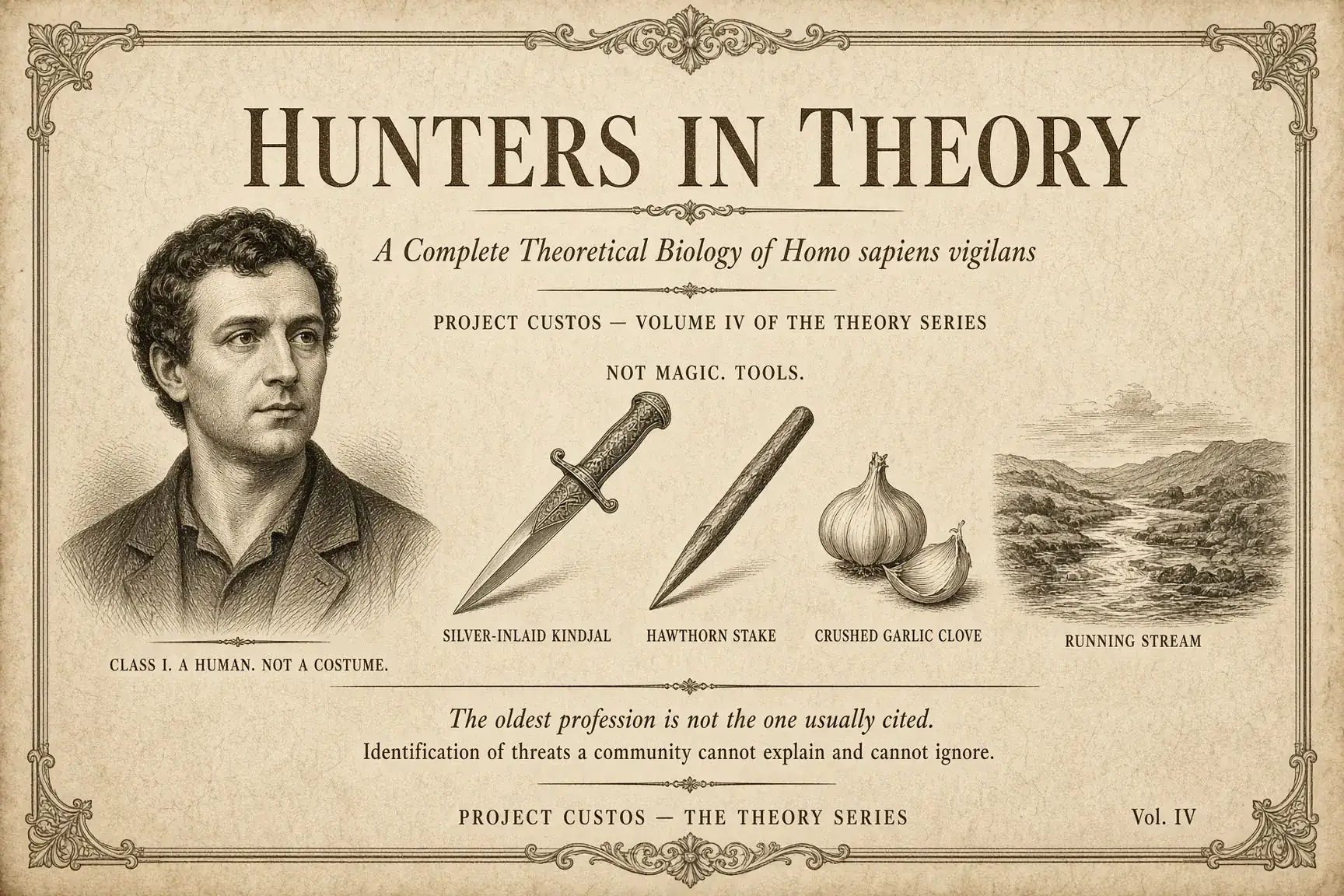
19 copperplates
Why the hunters left almost no archive, and how they knew the quarry.
Folklore remembers witches, cunning folk, and a hunt that went quiet. The file’s account is a profession: a kit specified by the form of the quarry, hunter families that produce hunter children because the work rewrote them, and a political closure in 1755 that ended the public question without ending the work. They were not chosen ones. They were trained.
The hunters were not a mood. They were a profession that went administratively quiet.
About ten and a half hours to read.
Print · eBook · Audio
Not yet. The shop is not open. Runtimes and ISBNs will sit here when they exist. Leave an address if you want the first letter.
It went quiet. There is a difference. The hunters were not a mood.
The most significant document in the history of monster hunting does not exist. It has never been found in any archive. No copy has survived in any library, public or private, in any language, in any form. It is referenced, obliquely and without attribution, in texts from at least eleven distinct cultural traditions spanning four continents and three thousand years of written history. The traditions that reference it do not agree on what to call it. They agree, with the precision of people describing the same object in different vocabularies, on what it contained.
The traditions are unanimous on the verify-before-engage principle and unanimous on the consequences of its violation. The failure mode of non-verification is not encountering a target more dangerous than expected. The failure mode of non-verification is engaging a baseline-human individual who fits several Phase One criteria for entirely mundane reasons, with the full force of an operational response designed for an organism several times more capable than a baseline human. No individual criterion is diagnostic. The combination is.
From this volume
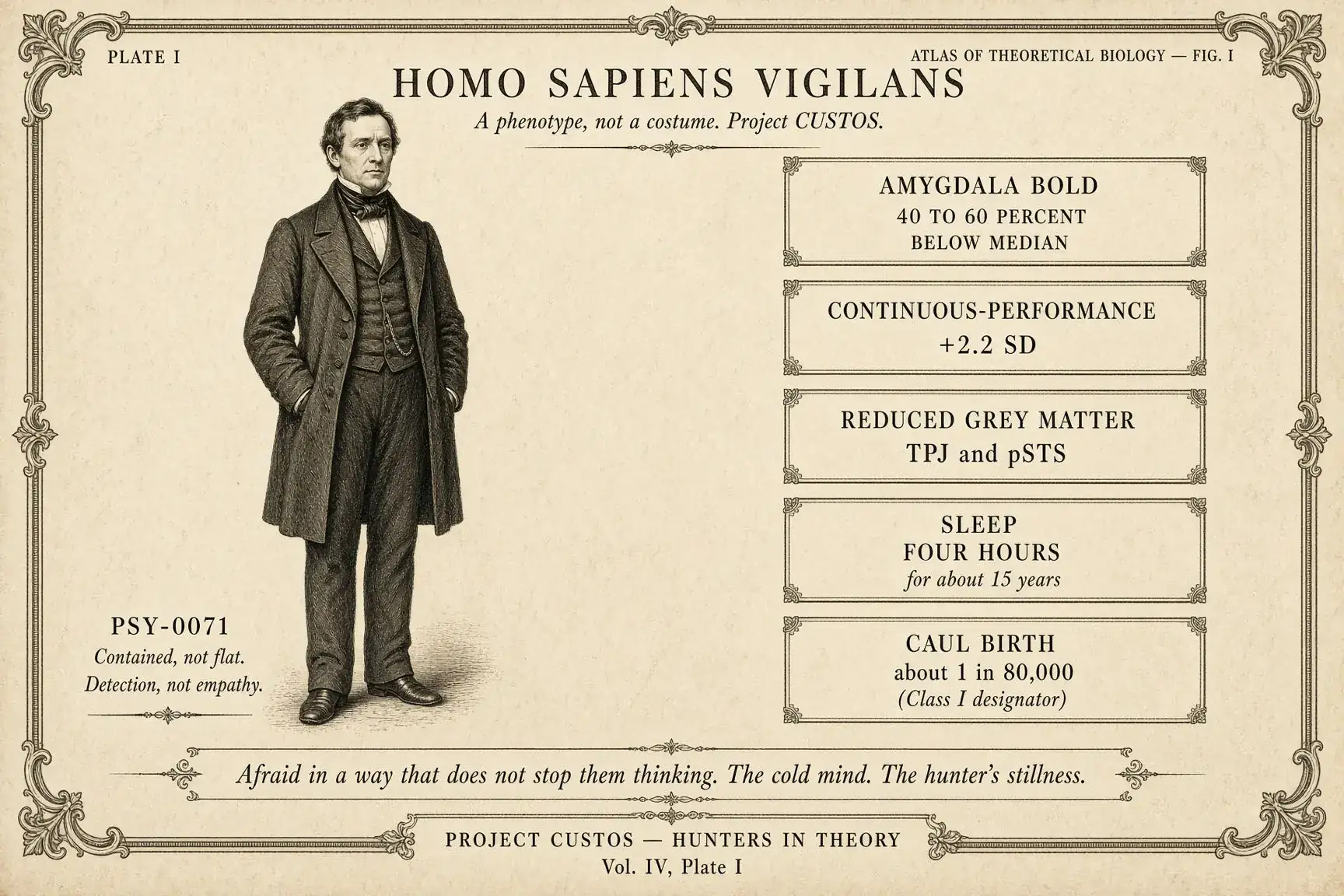
Plate I
Homo sapiens vigilans
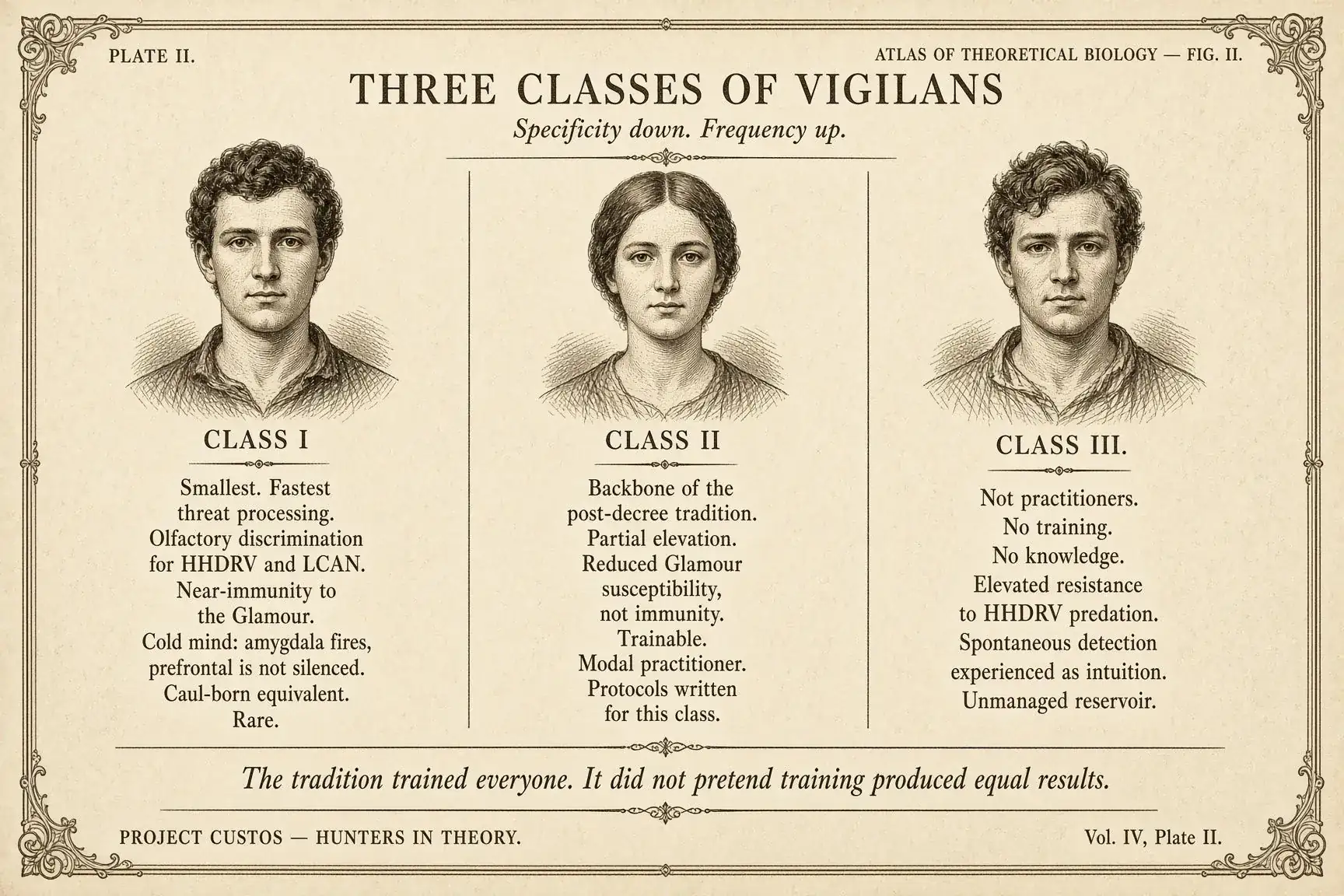
Plate II
Three classes
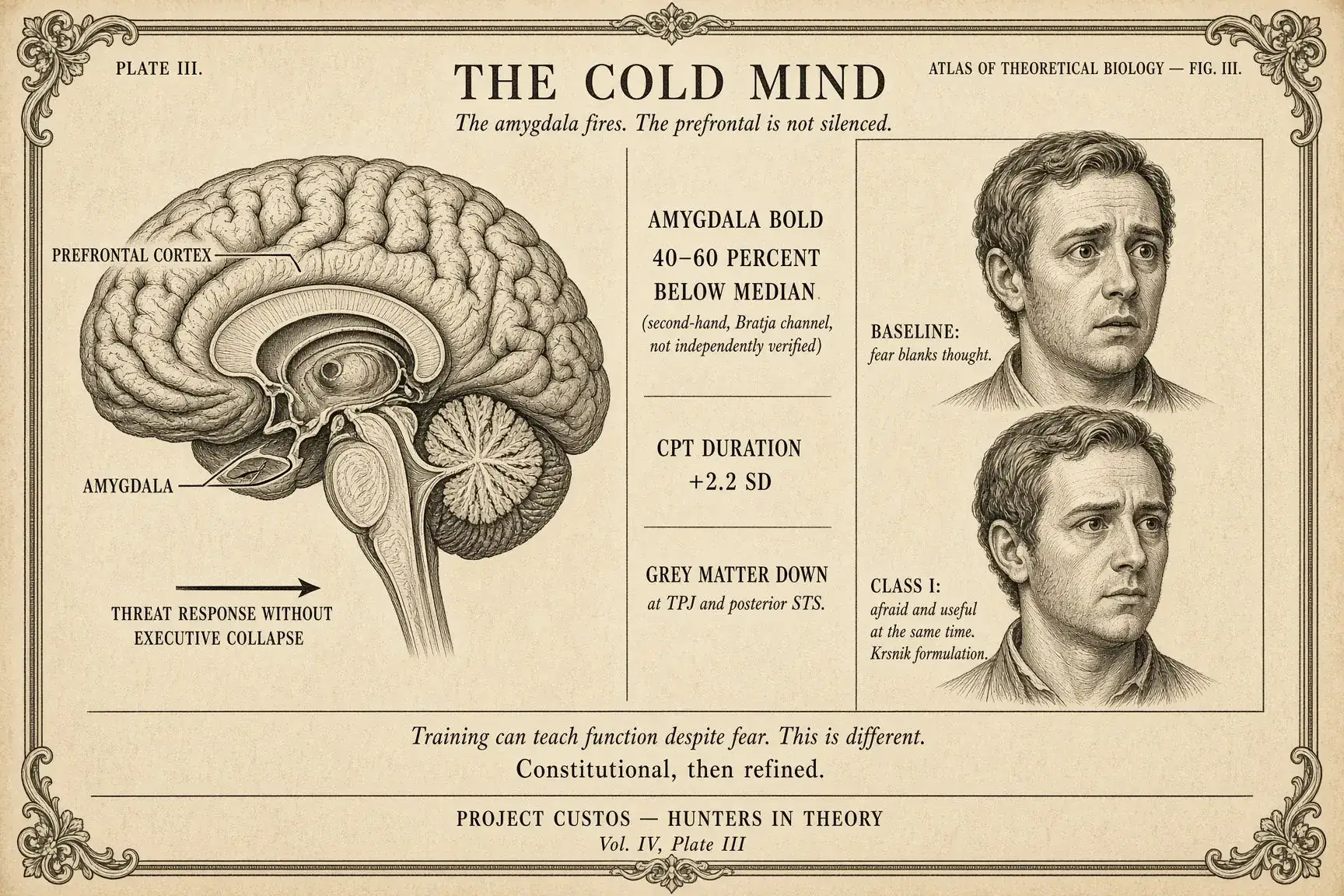
Plate III
The cold mind
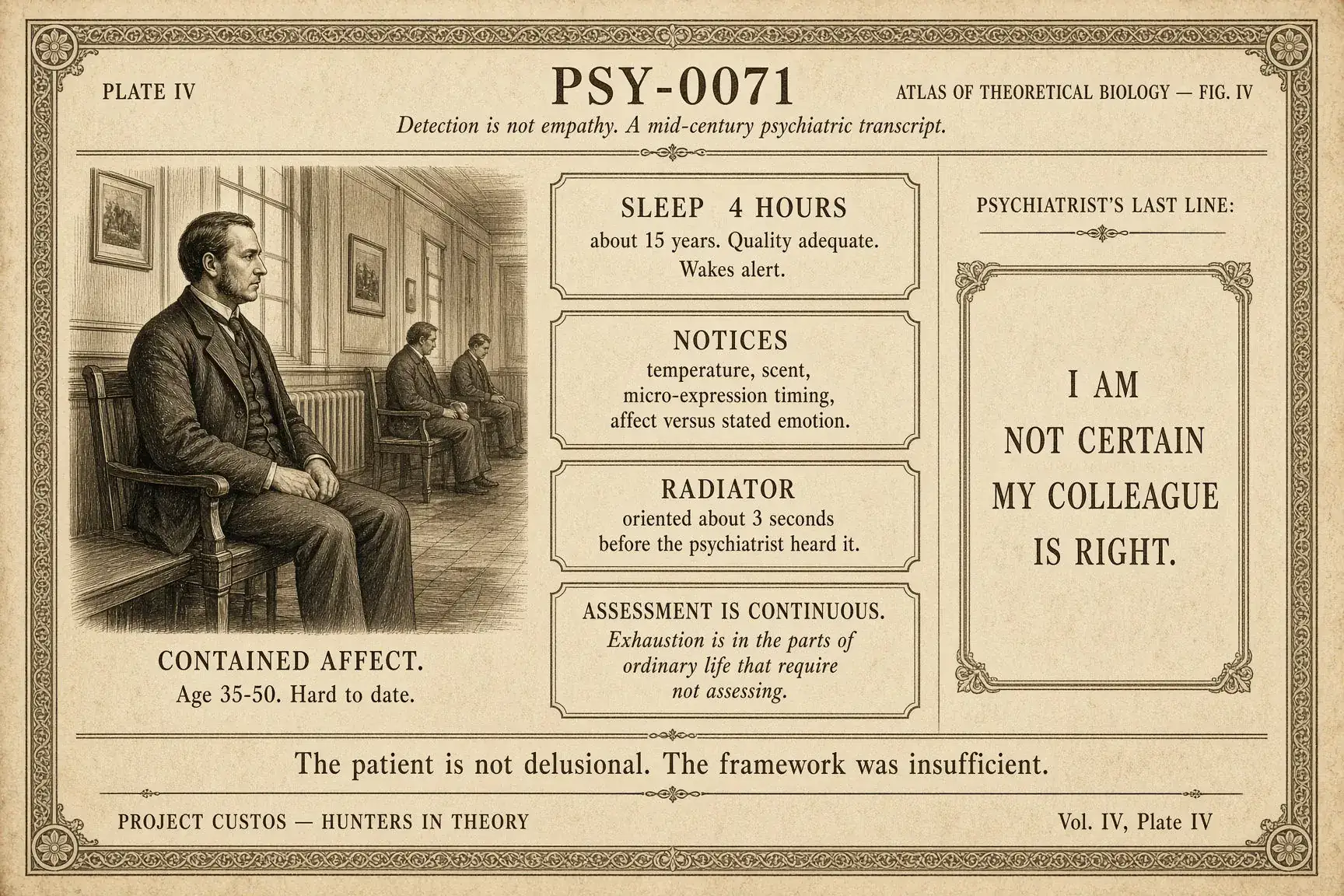
Plate IV
PSY-0071
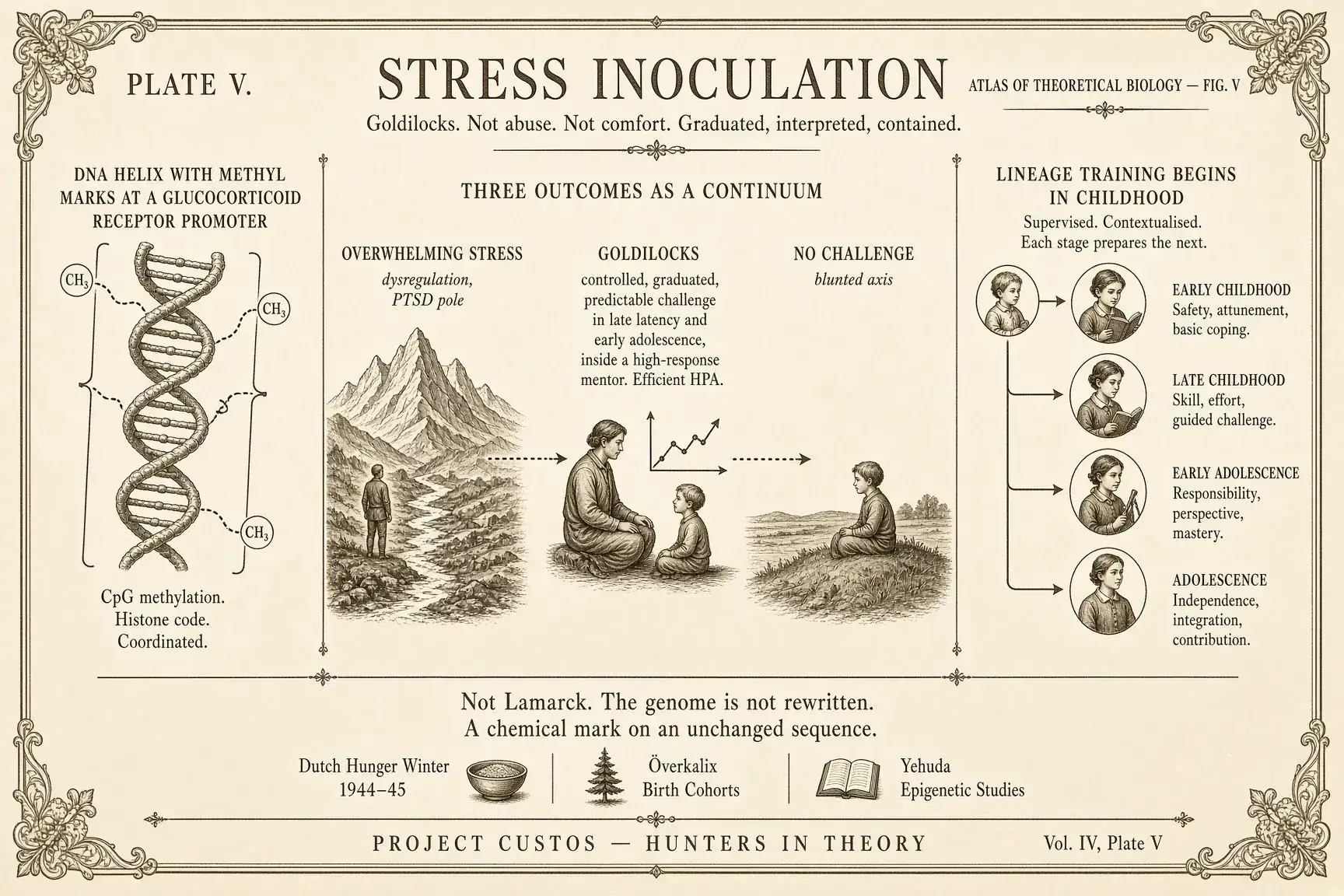
Plate V
Stress inoculation
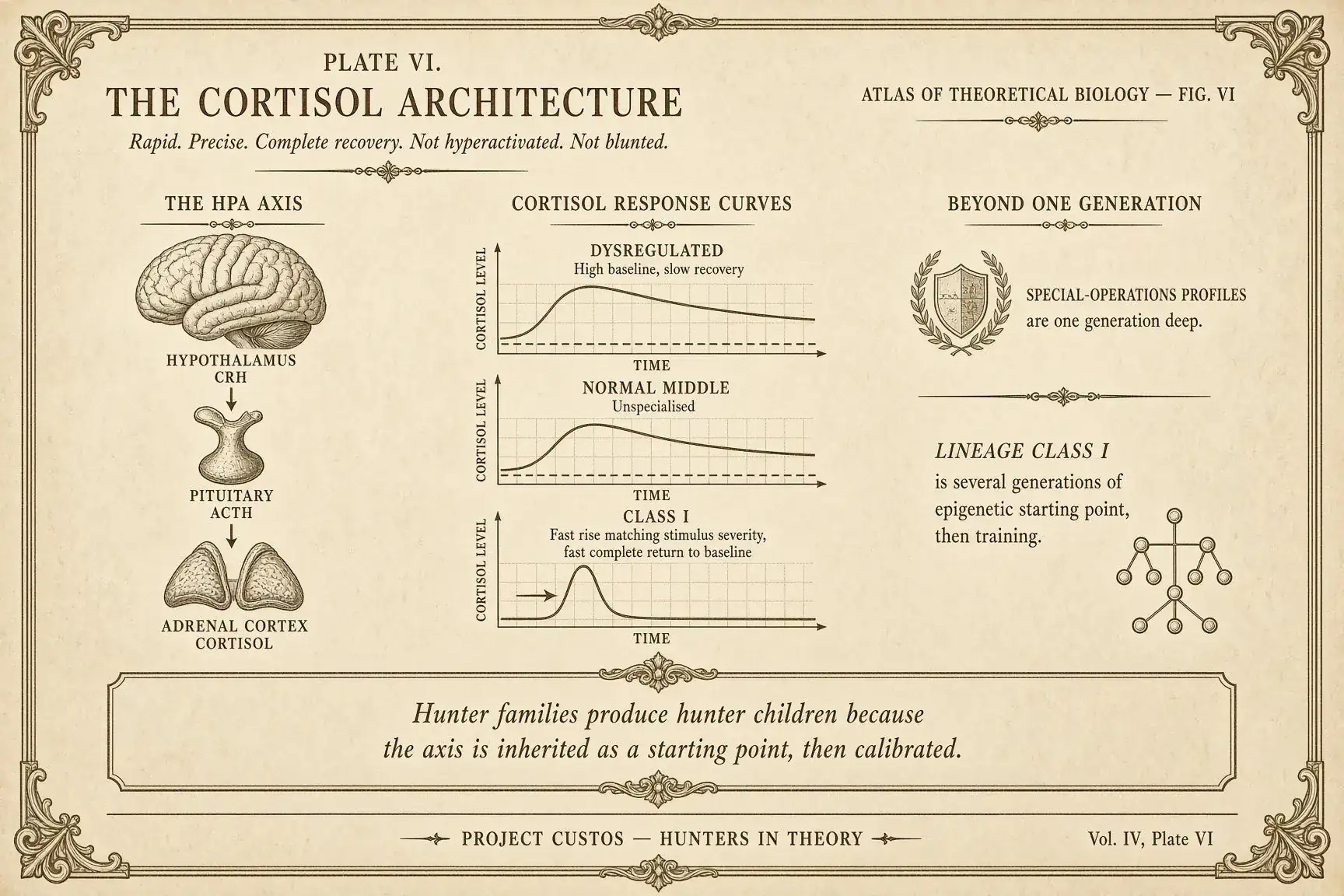
Plate VI
Cortisol architecture
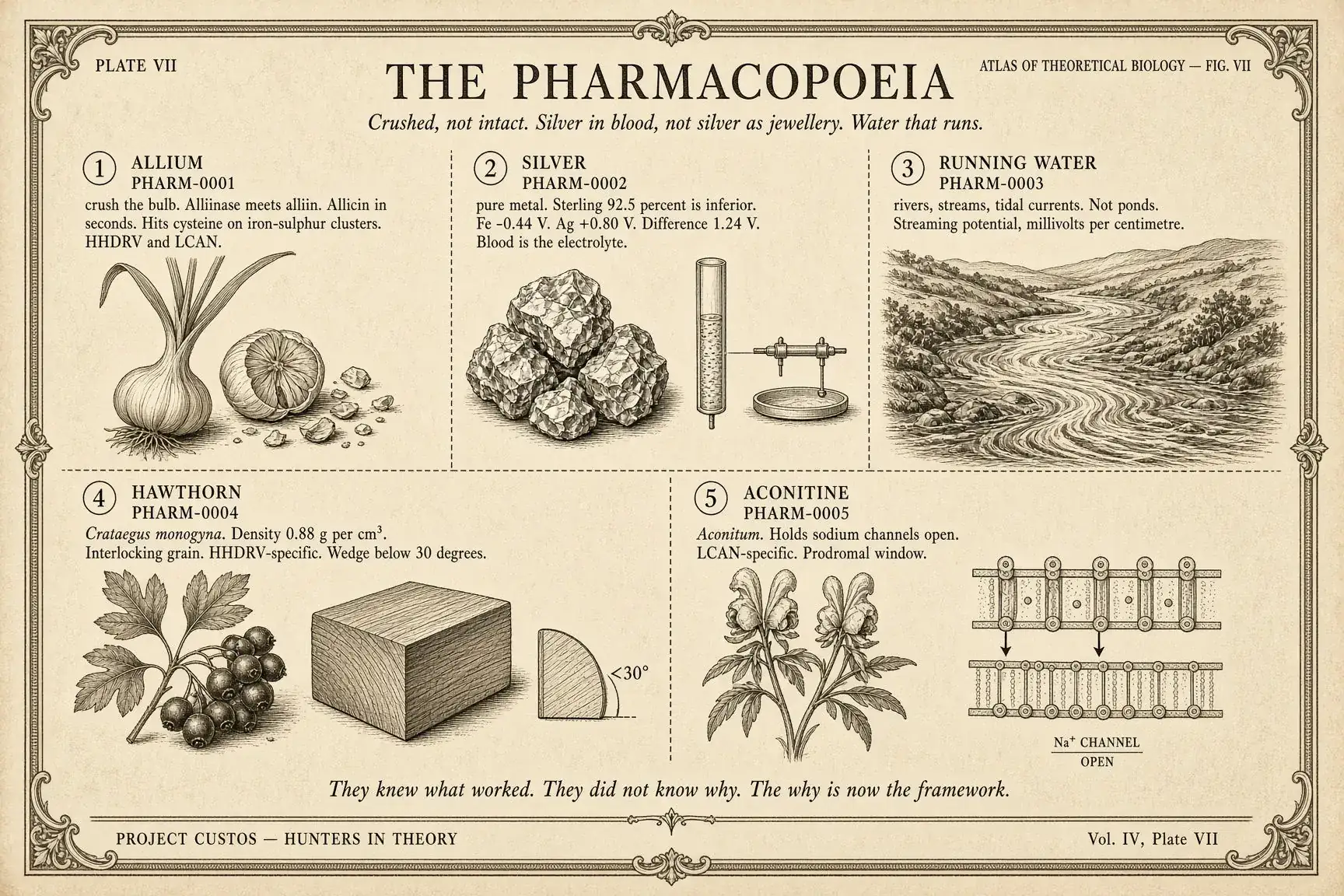
Plate VII
The pharmacopoeia
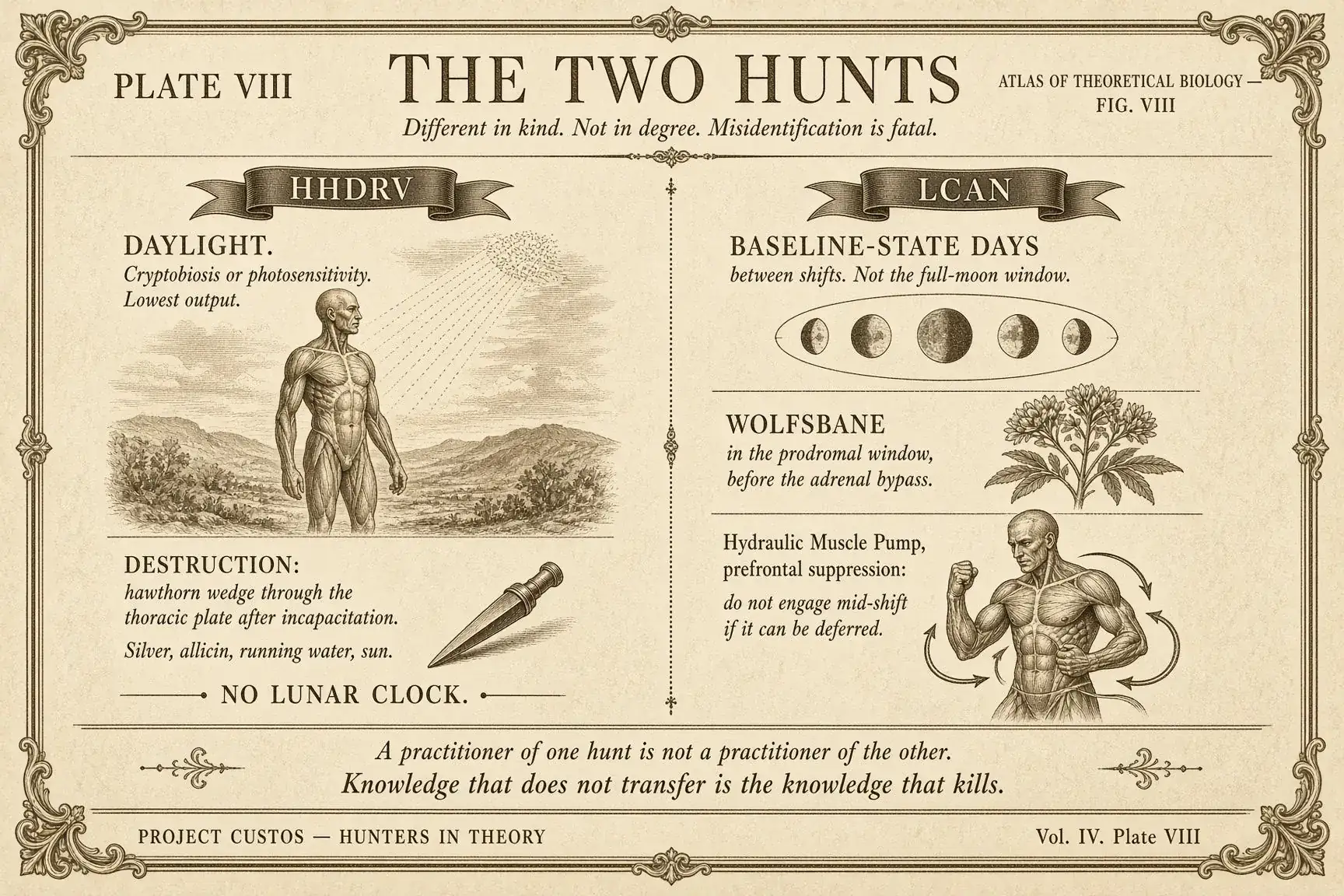
Plate VIII
The two hunts
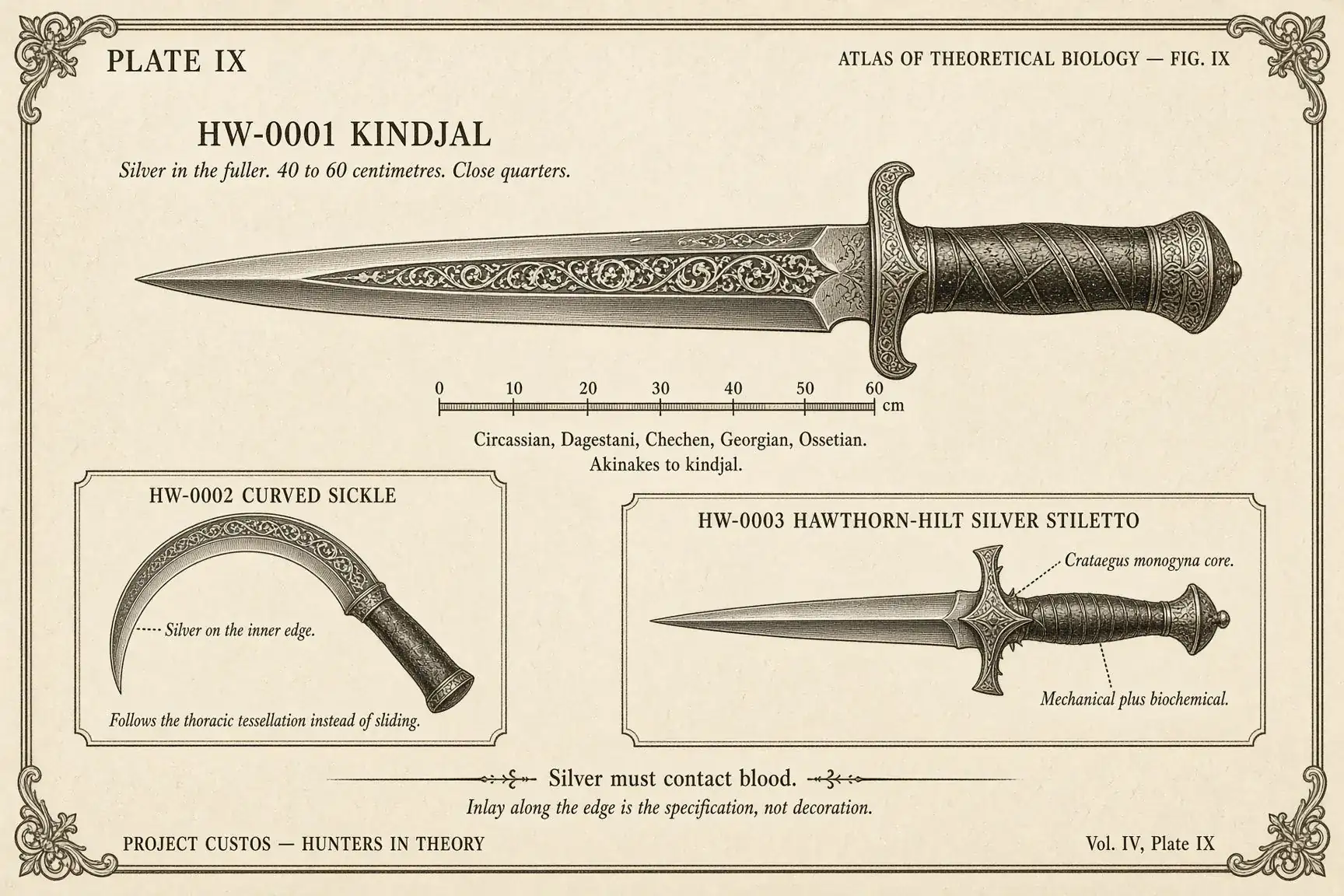
Plate IX
HW-0001 Kindjal
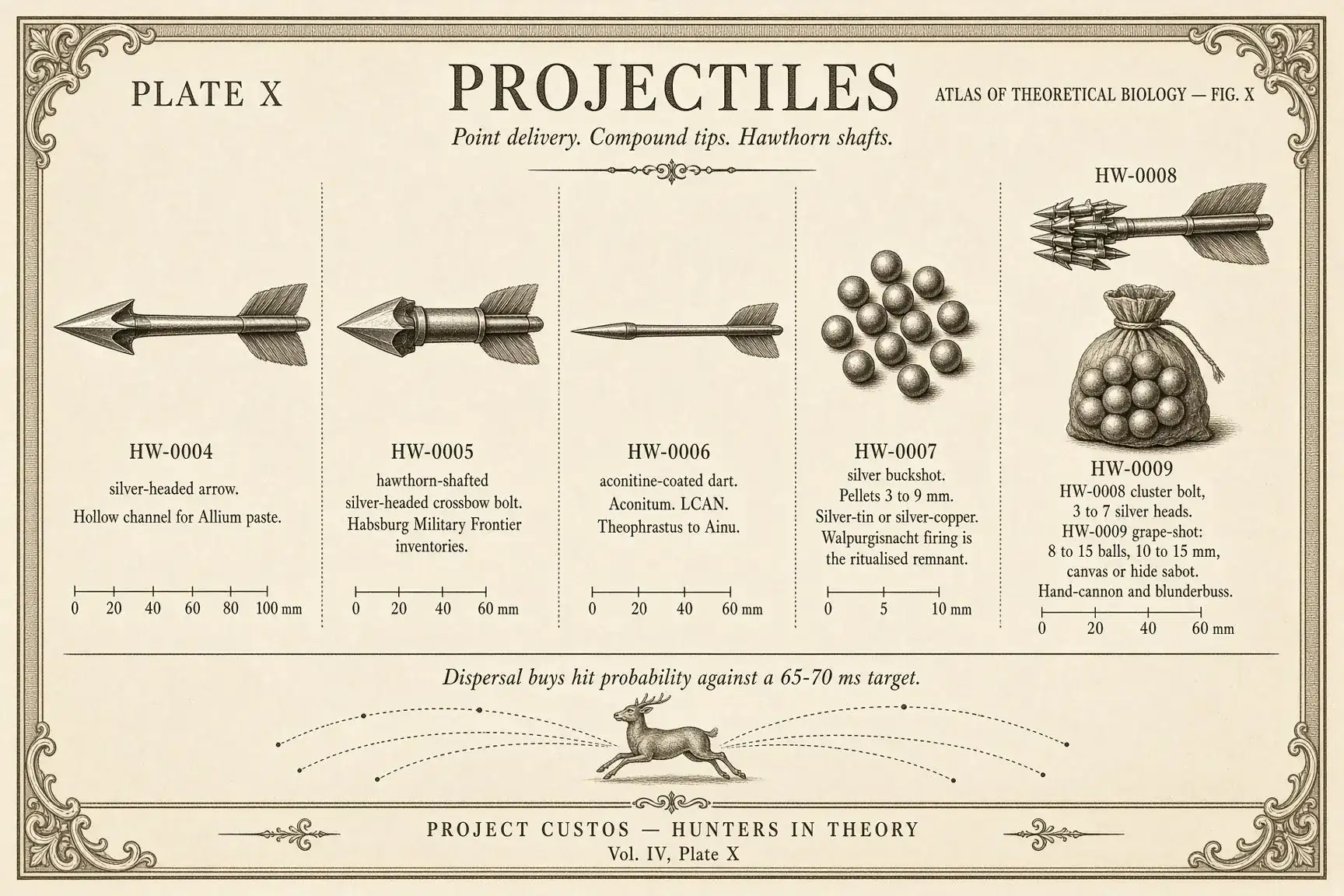
Plate X
Projectiles
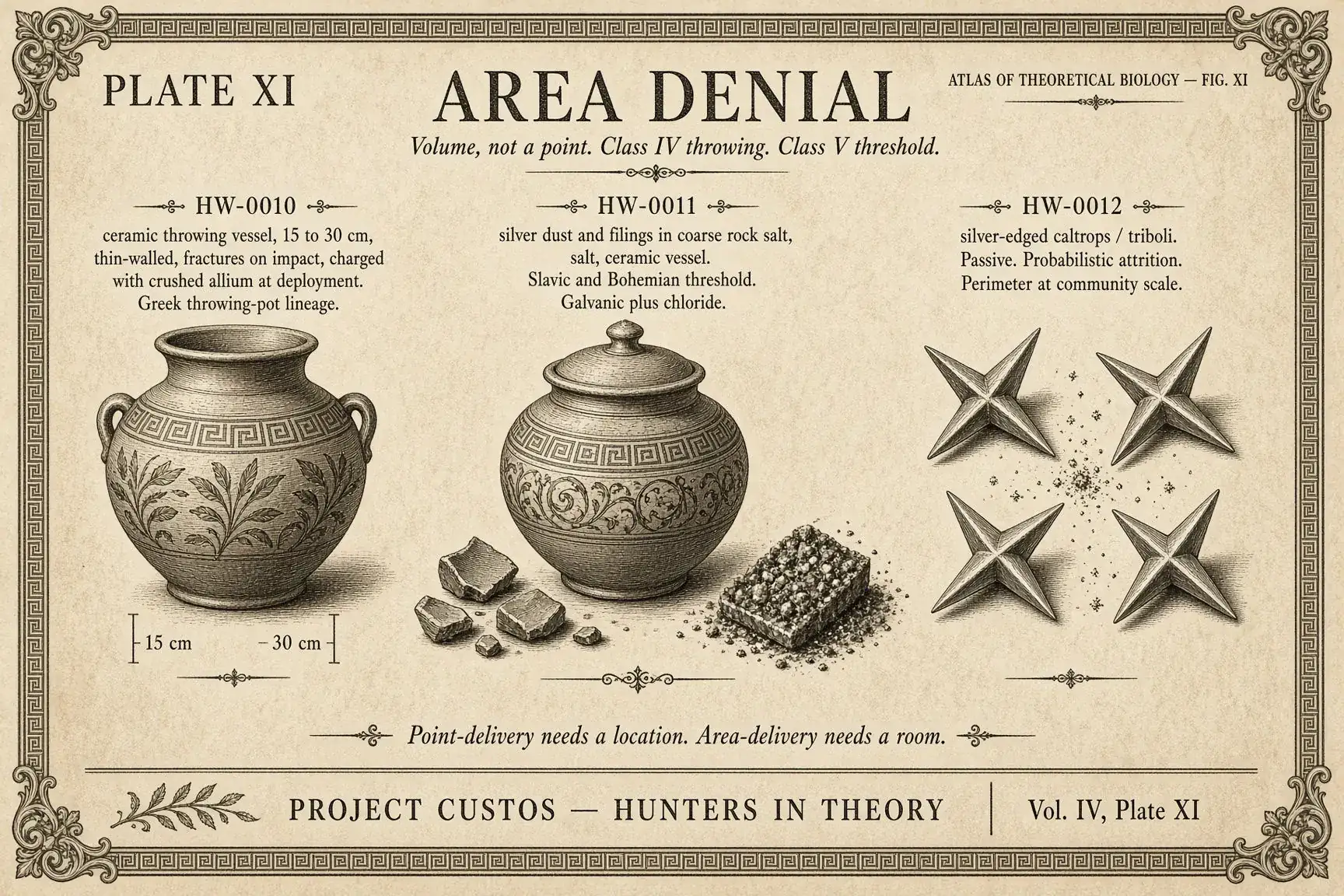
Plate XI
Area denial
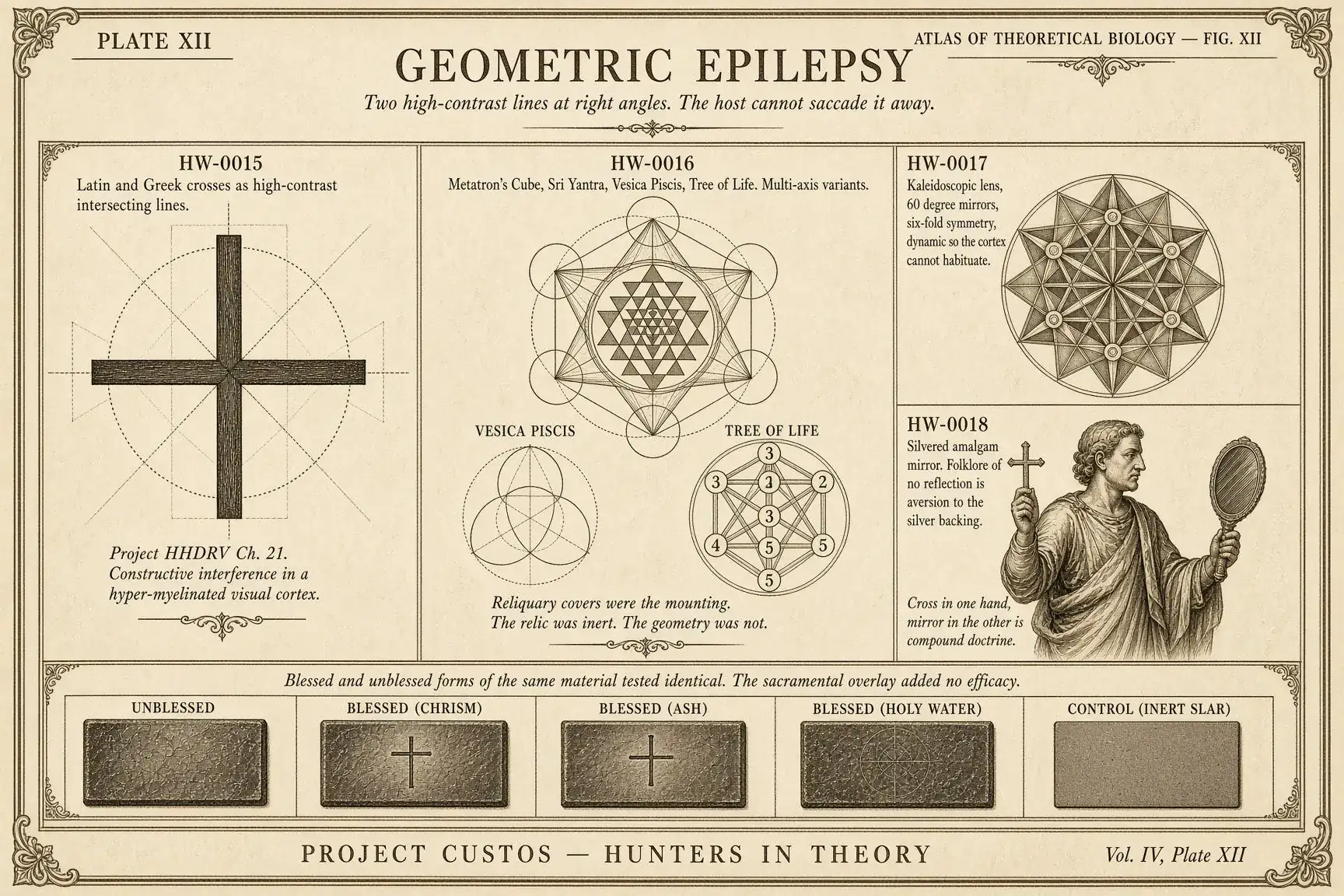
Plate XII
Geometric epilepsy
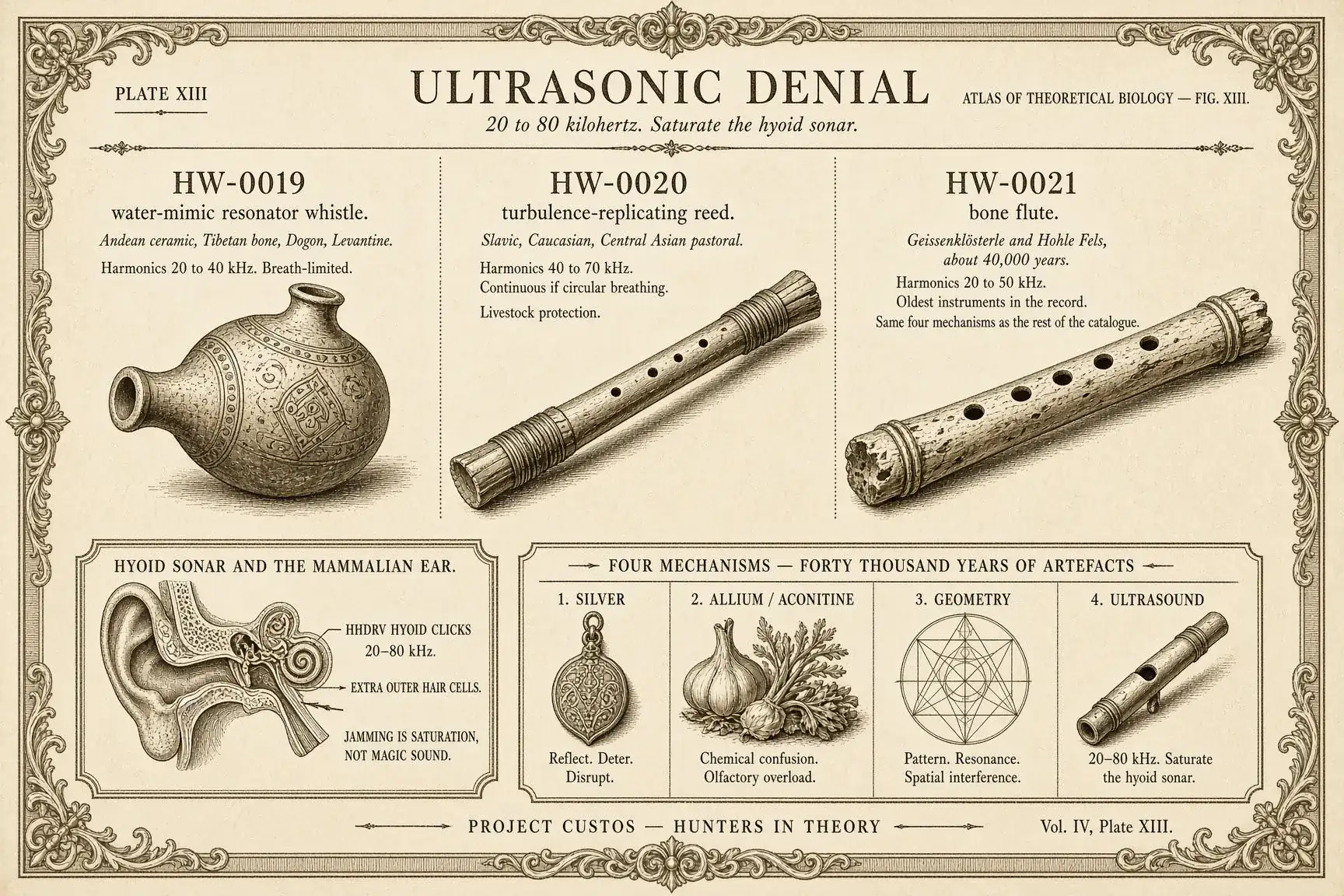
Plate XIII
Ultrasonic denial
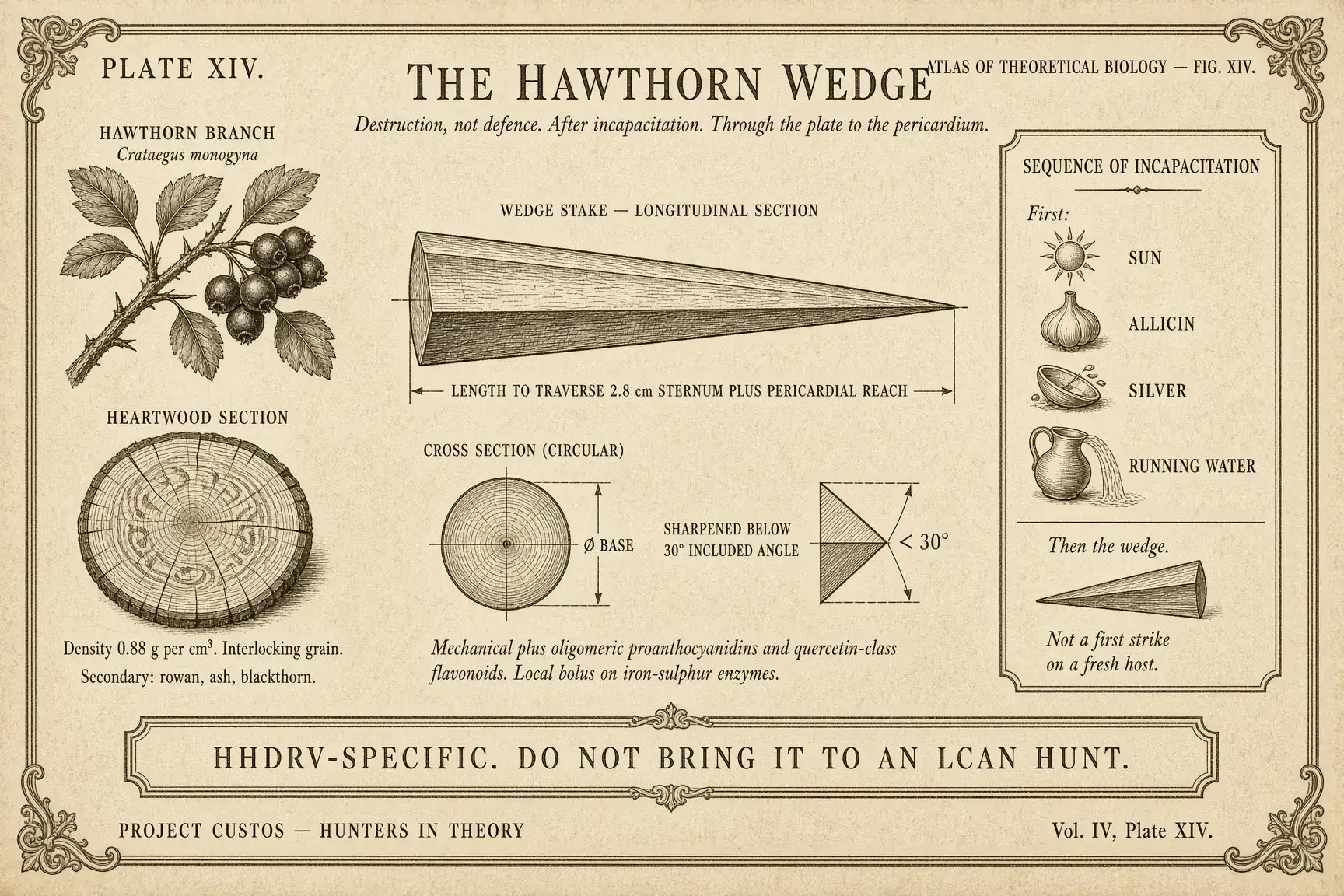
Plate XIV
The hawthorn wedge
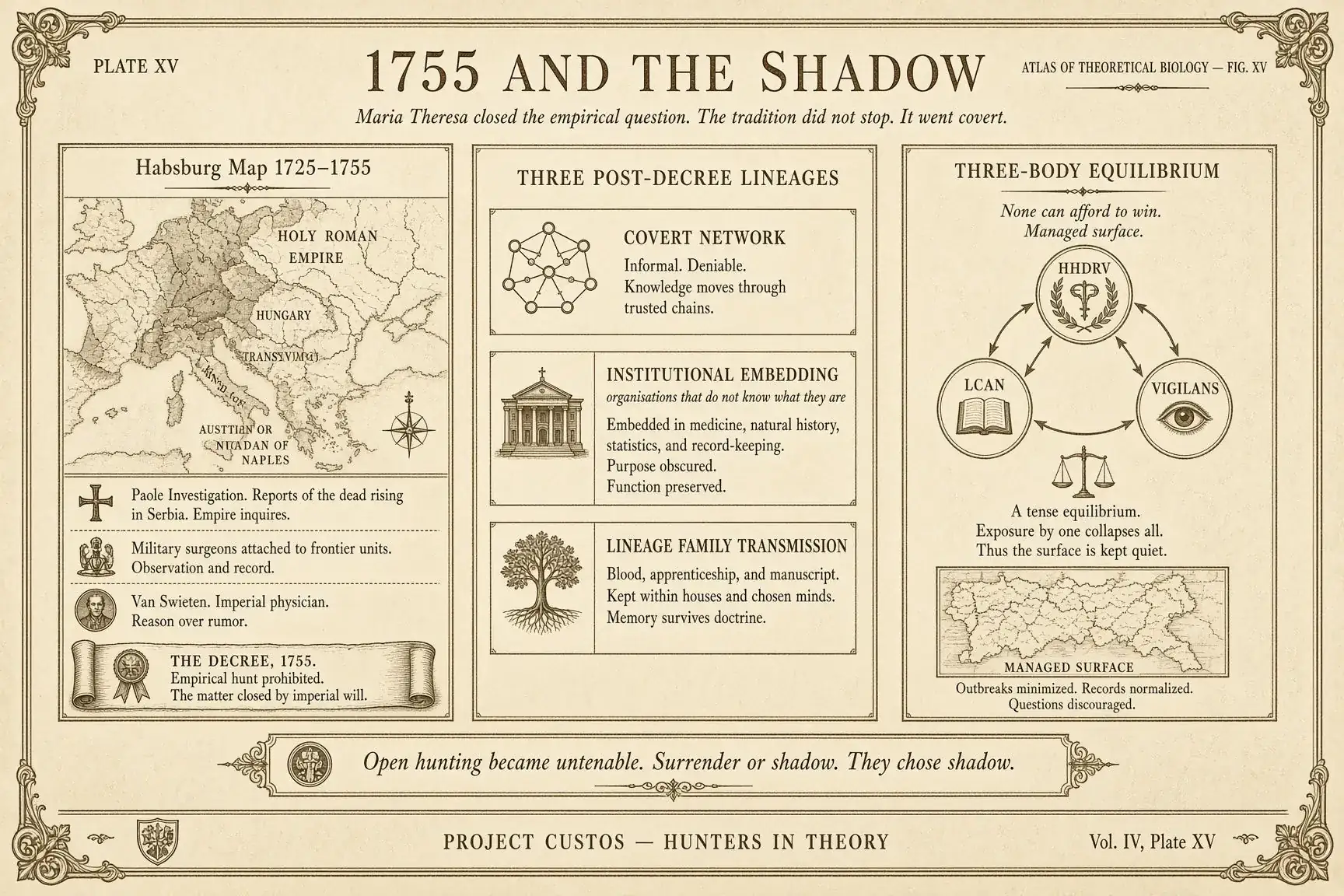
Plate XV
1755 and the shadow
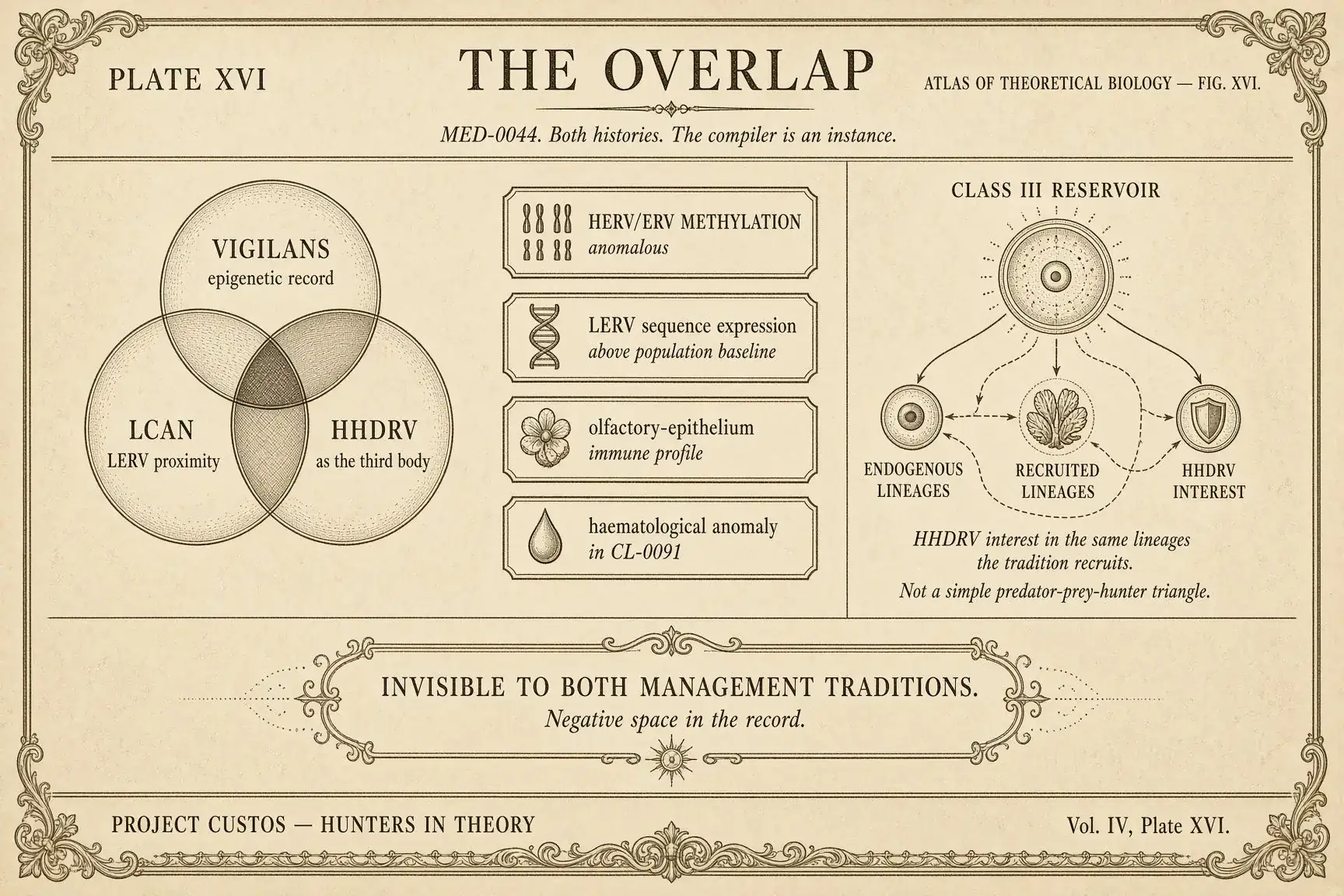
Plate XVI
The overlap
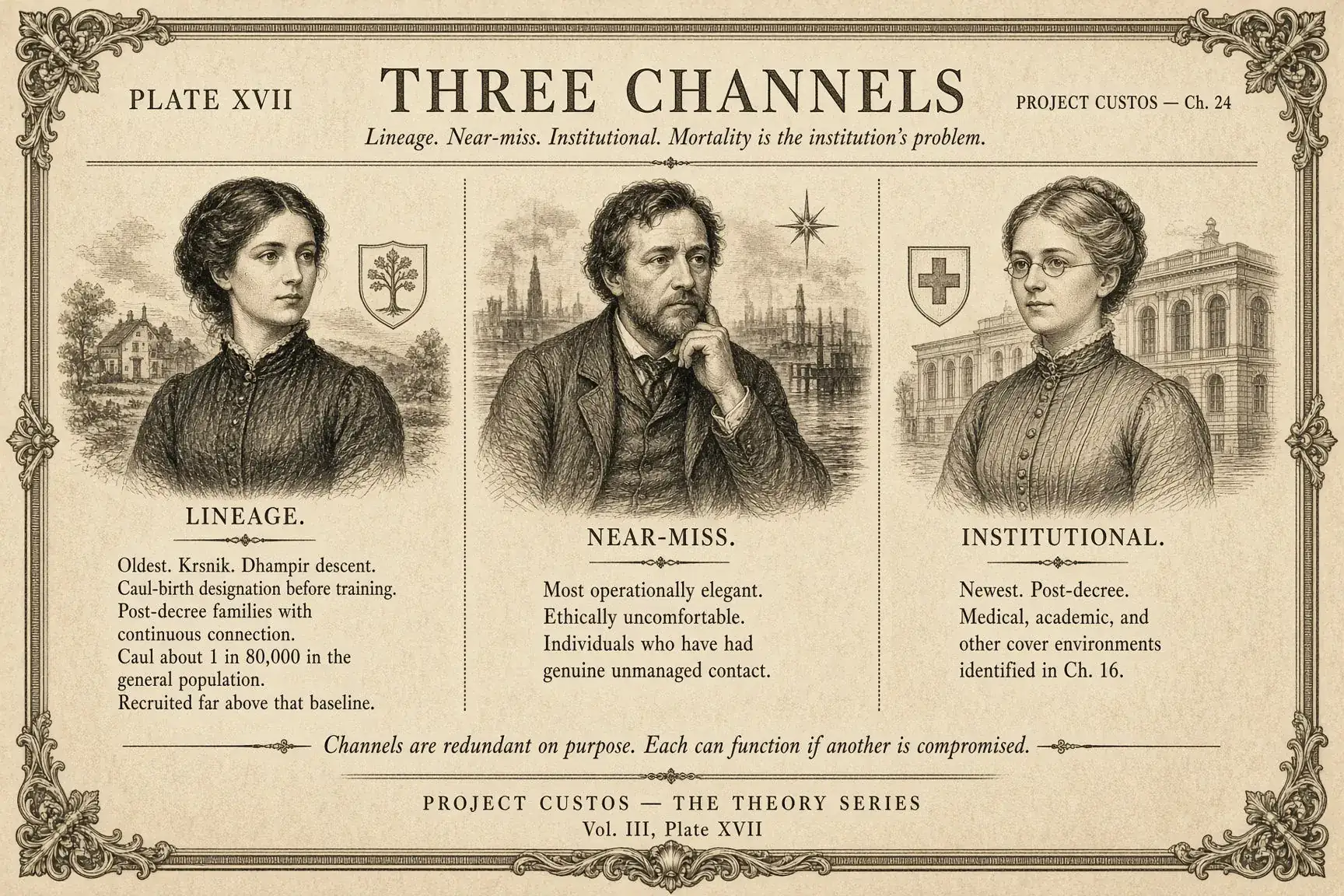
Plate XVII
Three channels
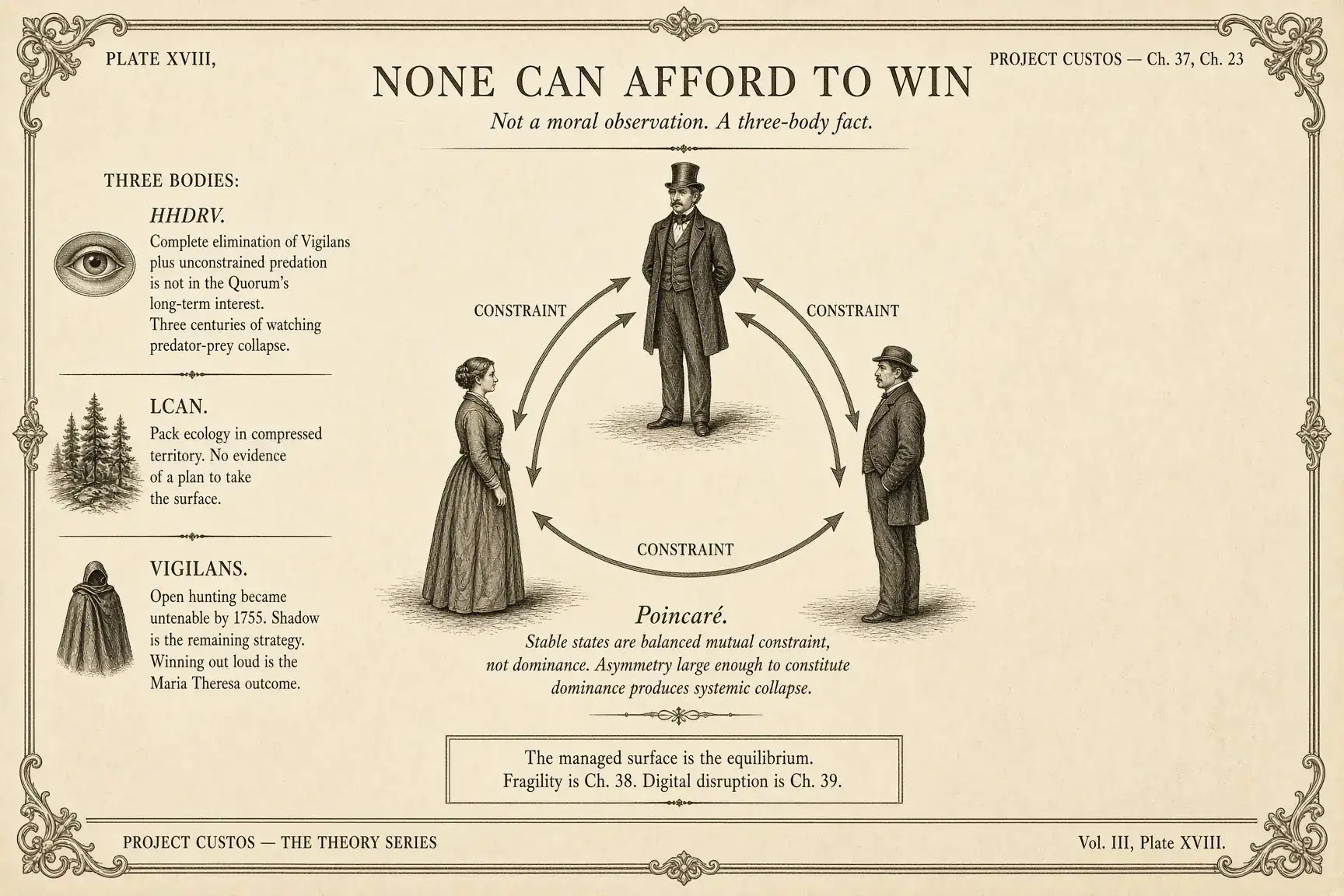
Plate XVIII
None can afford to win
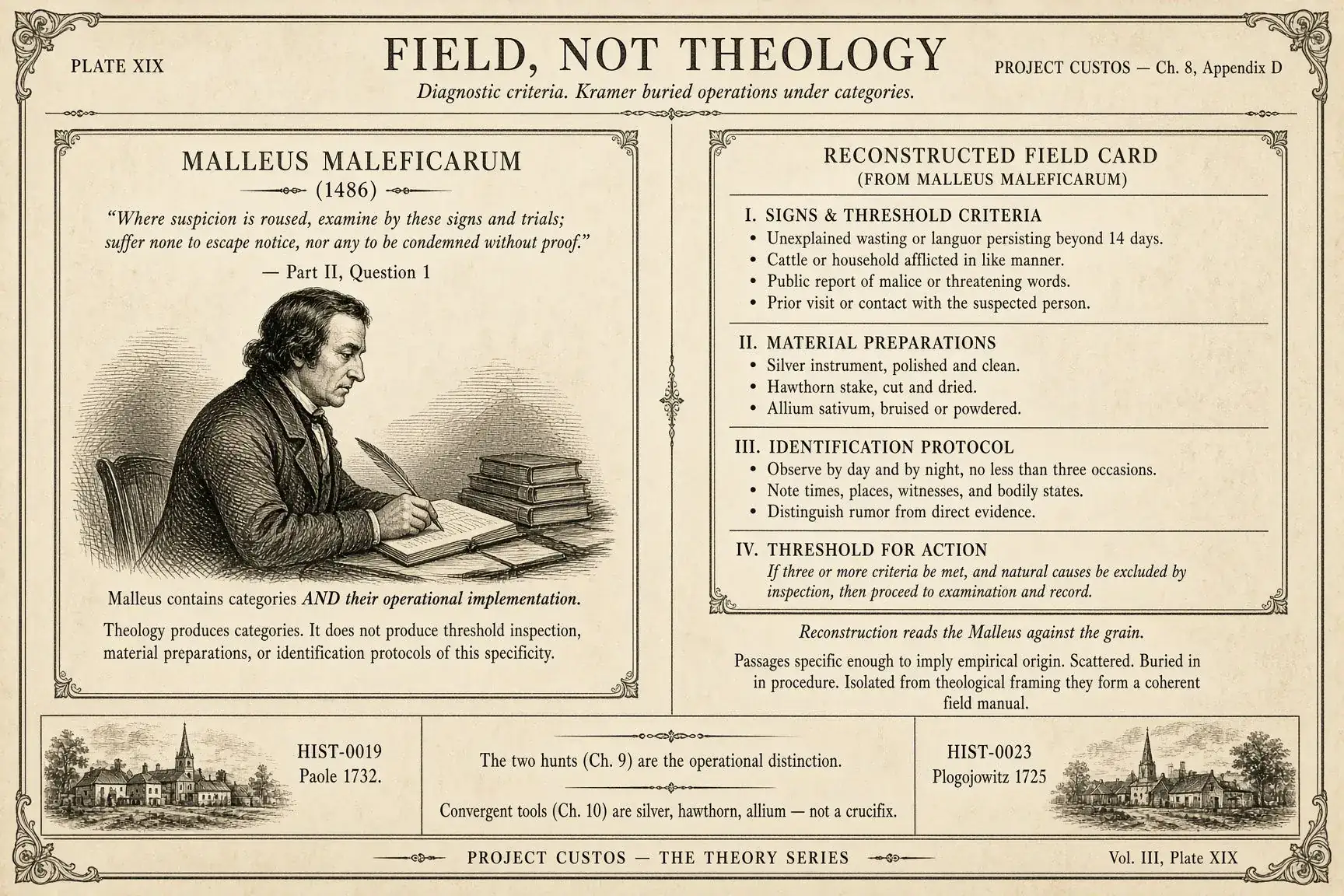
Plate XIX
Field, not theology
19 copperplates for Hunters. Specs live on the plate. Open the atlas
Table of contents
Part One — Origins: the first witnesses
The problem is absence. Witches and cunning folk were already in the field.
Part Two — The manual: what the hunters knew
Pharmacopoeia specified by form. Two hunts, one metal.
Part Three — The reversal: 1725 to 1755
Paole, van Swieten, Maria Theresa. Hunting went quiet; it did not end.
Parts Four–Five — Convergence / unified field
Sustained proximity. The three-body problem is already running.
Part Six — The biological question
Vigilans. Stress inoculation. Hunter families produce hunter children.
Parts Seven–Eight — Present / unified theory
None of the three can afford to win. It went quiet. There is a difference.
For the ones who kept no records. You were right not to. The compiler hopes some of you are still keeping that particular discipline.
A separate compiler, writing from a position in which the compiler's identity is itself part of the evidence. Dedicated to the ones who kept no records.
Start with these plates
Engine primer
Engine primer
Science pillars
Hunters left almost no archive. Witches and cunning folk were already in the field, under other names. The Ur-Manual is inferred from convergent operational knowledge across disconnected cultures.
Crushed allium, silver in contact with blood, water in continuous directed flow. Form specified. Whole bulbs, ponds, and holiness do not qualify.
Paole. Plogojowitz. Van Swieten. The Maria Theresa decree closed an empirical question by imperial order. Hunting did not end. It went administratively quiet.
Stress inoculation, NR3C1 methylation, a cortisol architecture that produces hunter children. Class I, II, III. An epigenetic caste, not a romance of chosen ones.
Weapons are applied chemistry hung off the two quarries. They are not the lead. The kindjal's silver sits in the blood-channel because a wound has to wet the metal.
Haemophage, Lycian, hunter. None of the three populations can afford to win. The managed surface is the result.
From this volume
Applied chemistry · CUSTOS Ch. 7, App. B
Charms. Holy water. Superstition that happened to work.
Field examination · CUSTOS Ch. 8
You just know. The evil shows itself.
HPA axis · CUSTOS Ch. 21, 27–28
Chosen ones. A hunter bloodline. Destiny.
Genome and craft · CUSTOS Ch. 30
The hunter who is also the thing hunted.
Hidden ecosystem · CUSTOS Ch. 23
Hunters exist to wipe them out. One war, one ending.
Blood-channel · CUSTOS App. H · HW-0001
A Caucasian long knife. Silver for show. A gentleman's blade.
Hawthorn grip · CUSTOS App. H · HW-0003
A ritual dagger. A folk charm on a pretty hilt.
Compound head · CUSTOS App. H · HW-0005
A hunting quarrel. Silver for ceremony. Hawthorn because it grew nearby.
Aerosol charge · CUSTOS App. H · HW-0010
A plague pot. A fumigation jar. Peasant disinfectant.
20–80 kHz band · CUSTOS App. H · HW-0019
A scout's pipe. A ceremonial bone. A toy that makes no sound.
Visual cortex · CUSTOS App. H · HW-0017
An optical toy. A philosopher's curiosity. Coloured glass for children.
Tessellated thorax · CUSTOS App. B · PHARM-0004
A wooden stake through the heart. Always the heart. Always wood.
Tendon axis · CUSTOS App. H · HW-0002
A harvest tool. A sacrificial knife. A peasant's curve.
Pattern, not point · CUSTOS App. H · HW-0007
A silver bullet. One shot. Theatre.
Visual cortex · CUSTOS App. H · HW-0015
The cross burns them. Faith as a weapon.
Ultrasonic harmonic · CUSTOS App. H · HW-0021
The first music. A campfire. Culture beginning.
Sodium channel · CUSTOS App. B · PHARM-0005
A poison garden. A witch's flower. Something for wolves.
Primary documents
Full texts remain in the printed volumes. These are the designations.
Printed appendices
The first letter
The shop is not open. Leave an address for the first letter — it comes only to this desk. The field packet is already here: a short field packet from Book 1. You can also write [email protected]. Addresses are kept only to send that letter. Privacy.